History shows a clear pattern: the investors who recognized the exact inflection point in the dot-com boom pocketed 400–800% gains in 18 months. Those who spotted the same moment in cloud computing saw 300–600% returns. Based on 50 years of market data, that same moment is happening right now — and the acceleration phase has already begun.
This free 7-page report reveals where we are in the current megatrend cycle, why the next 18 months are critical, and how to position yourself before the window closes. Don't be the investor who enters too late.
Get the Free ReportBy clicking 'Get the Free Report' you are automatically subscribing to Darwin Investor Network and will receive a free subscription to the Chaikin PowerFeed newsletter. Unsubscribing is easy. Privacy Policy

Live Well. Invest Smart. No Apologies.
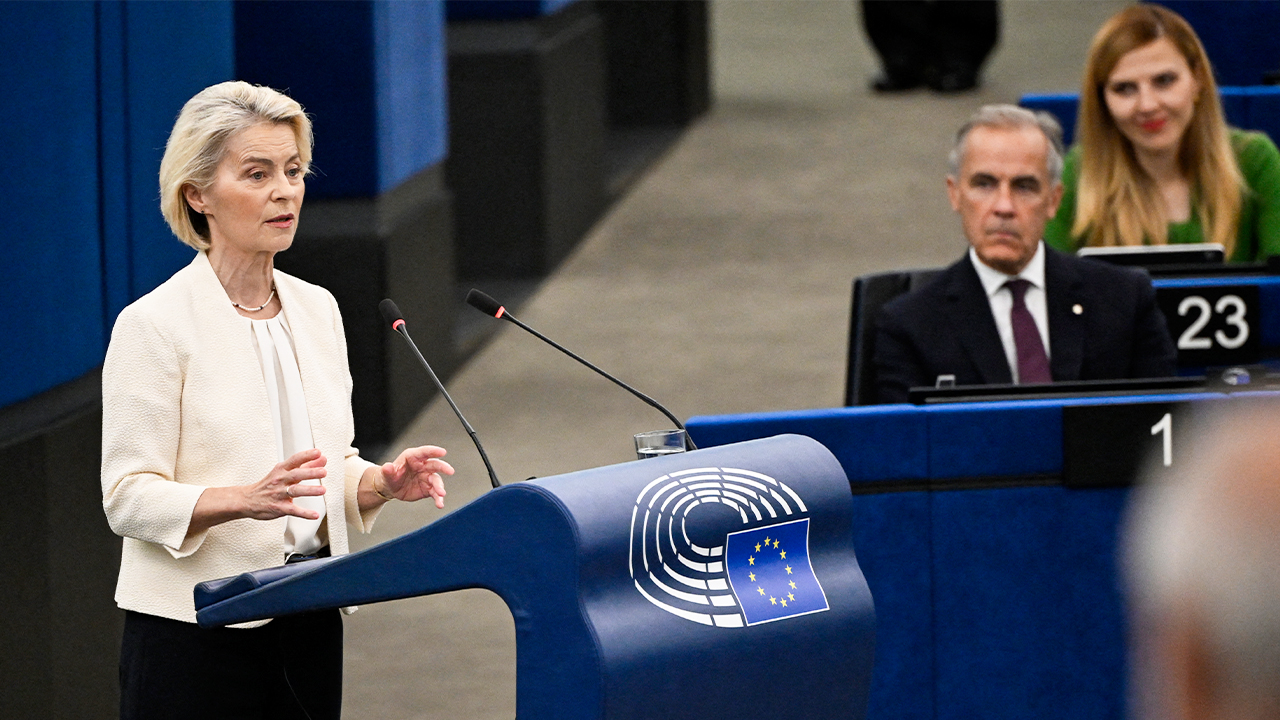
Image via Fox Business
Europe Courts Canada With a New “Associate Member” Lane
The European Commission is floating something the EU hasn’t really offered before: an “associate member” status for Canada. The pitch is straightforward and strategic. With U.S. tariff tensions and on-again/off-again trade friction, Europe wants more reliable, friendlier supply-chain integration for critical goods, industrial inputs, and advanced manufacturing.
For Canada, this is more than a symbolic handshake. If the structure comes with real market access, regulatory alignment, and procurement pathways, it could deepen capital flows and corporate partnerships across energy, minerals, aerospace, defense-adjacent manufacturing, and agri-food. And it’s a reminder that in 2026, trade policy is effectively industrial policy wearing a tie.
The subtext is loud: allies are building redundancy against U.S. unpredictability. That doesn’t mean the U.S. gets cut out, but it does mean Canada is being invited to diversify its economic gravity. When supply chains get “integrated,” someone’s pricing power improves and someone’s leverage fades.
🥃 Cole's Take: If you’re managing real wealth, you treat this like a map update, not a headline. The biggest winners won’t be politicians; it’ll be companies that can certify, ship, and comply across jurisdictions faster than the next guy. I’d watch Canadian industrials, critical minerals names, and logistics firms that can monetize cross-Atlantic demand without needing U.S. permission slips.

Image via MarketWatch
Retail Sales Jump: The Consumer Isn’t Tapping Out Yet
U.S. retail sales surged in August, posting the biggest increase in five months. That’s a clean data point that the economy carried momentum into late summer, even after a long stretch of rate fatigue and cost-of-living grumbling.
This kind of print usually means two things at once. First, households are still spending on essentials and small luxuries, which keeps the flywheel turning for services, travel, and discretionary goods. Second, it gives the Fed less room to declare victory early. A hot consumer can be great for earnings, but it can keep financial conditions tighter for longer.
The market angle: broad consumption strength tends to favor high-quality retailers, payments networks, and logistics operators, while it pressures the “rate-cut salvation” trade. If you’re hoping for easy money conditions to do the heavy lifting, this report is a reminder that the economy still has its own engine.
🥃 Cole's Take: I like consumer resilience, but I don’t like investors getting sloppy about what it implies for rates. If spending holds up, you win on the revenue line but you may lose on valuation multiples if yields stay stubborn. Keep your exposure in businesses with pricing power and repeat customers, not brands that only look good when borrowing costs fall.

Image via TheStreet
Broadcom’s CEO Calls Time on the AI Fantasy Math
Broadcom’s CEO delivered a blunt read on the biggest AI debate right now: how much of today’s spend is durable infrastructure buildout versus a hype cycle that needs constant storytelling to justify capex. He’s sticking by AI revenue targets, but the tone is unmistakable: the winners will be the suppliers with real demand signals, not the folks selling dreams and decks.
AI is already useful, but the market is arguing about pace and profit. Enterprises want productivity without runaway costs, and they want predictable returns on expensive silicon. Meanwhile, everyone in the ecosystem is trying to decide whether we’re still in the “buy everything” phase or entering the “prove it” phase.
Broadcom sits in a spot that tends to see the truth early: plumbing, networking, custom silicon, and the unglamorous layers that have to work at scale. When a CEO in that seat talks plainly, it’s worth listening, because he’s not paid to be optimistic; he’s paid to be right.
🥃 Cole's Take: The AI trade is maturing, and that’s healthy. I’d rather own the toll collectors and infrastructure enablers than chase whichever app is trending this quarter. If your AI thesis depends on perpetual exponential spending with no margin discipline, it’s not a thesis, it’s a hope.

Image via GOLF.com
Asheville’s Fall Stop Has a New Favorite: A Rookie With Sharp Edges
The Biltmore Championship in Asheville is getting an interesting wrinkle: rookie Jackson Koivun opens as a narrow betting favorite. That’s not a courtesy nod. It’s the market saying his profile fits the course and the moment, and that his ceiling is being priced in early.
FedEx Fall events can be weird in a good way. Motivation varies, fields can be volatile, and you often see a mix of hungry rookies and pros trying to stabilize status. That’s where a young player with momentum can look like a shark in a quiet pond.
Asheville is also the kind of setting that reminds you golf is supposed to be an escape, not just a stats contest. Mountain air, a little bite in the morning, and a walk that feels earned. If you’re planning a trip, this is the sort of week you build a long weekend around.
🥃 Cole's Take: When a rookie becomes the favorite, the value often shifts to the next tier, not the headline name. I’m not fading Koivun’s talent, but I’m wary of paying top price in a format built for surprises. If you bet it, keep it small and spread the risk; if you watch it, pay attention to who stays calm when the pressure is brand new.
📎 GOLF.com

Image via Car and Driver
A U.S.-Built Defender Truck? Land Rover and Stellantis Circle the Idea
Car and Driver reports that Land Rover and Stellantis are aiming to build a Defender truck in the U.S., potentially the first American-produced vehicle from their new partnership. That’s a big swing: the Defender name carries real brand heat, and a truck format is the most direct way to meet U.S. demand where it lives.
This is about more than product. U.S. production can reduce tariff exposure, shorten lead times, and align pricing with a market that’s sensitive to monthly payments even at the premium end. Stellantis brings manufacturing scale and local footprint; JLR brings design credibility and a lifestyle halo that still sells when the economy gets choppy.
If they get it right, a Defender truck becomes a high-margin, high-demand status tool that also happens to be capable off pavement. If they get it wrong, it’s an expensive lesson in how Americans judge trucks: harshly, and forever.
🥃 Cole's Take: I’ll believe it when I see the spec sheet and the pricing, but the strategy is sound. The U.S. rewards brands that build here and understand how trucks are actually used, not just how they look on a launch stage. If this comes to market with real capability and a smart trim ladder, it could print money; if it’s overstyled and underbuilt, it’ll be a meme by week two.

Image via Robb Report
Mijenta’s New Blanco Is the Kind of Traditional Release That Deserves a Real Glass
Mijenta released a new blanco in its Maestra Selection series, made using traditional methods and positioned as a higher-end expression of what an unaged tequila can be. This is the third release in the series, and it’s aimed at people who want clarity and character, not vanilla sweetness dressed up as “smooth.”
Blanco is where you can’t hide. If the agave isn’t right, if the fermentation is sloppy, if the distillation cuts are careless, you taste it immediately. A strong blanco tells you the producer is serious, because there’s nowhere for oak to cover mistakes.
For anyone who likes pairing lifestyle with the portfolio: spirits are still one of the few “luxury consumables” categories where craftsmanship matters and buyers talk to each other. A good release can build brand equity quietly over time, the same way a good course builds its reputation one round at a time.
🥃 Cole's Take: If you’re going to drink tequila, drink one that tastes like it came from a place and a process, not a marketing meeting. A well-made blanco is my go-to when I want something clean after a long day outside, and it’s the fastest way to judge a producer’s integrity. I’d rather buy one excellent bottle and actually enjoy it than collect five mediocre ones for the label.
Cole Hargrove | The Balanced Brief — Live Well. Invest Smart. No Apologies.
— Cole Hargrove