Oil markets are shifting as Venezuela's disruption removes critical barrels while spare capacity shrinks. Supply pressure is building before headlines catch up — and smart traders are positioning now.
Our exclusive briefing reveals three energy stocks emerging from this supply shock, plus the key signals to monitor as this setup evolves. This is about preparation, not prediction.
Get the Free Oil Trading ReportBy following the links above, you're opting in to receive valuable updates from Wealthiest Investor News plus 2 bonus subscriptions. Your privacy is important to us. You can unsubscribe anytime. See our privacy policy for details.

Live Well. Invest Smart. No Apologies.

Image via Fox Business
Alan Greenspan Dies at 100 — The Fed Chair Who Defined an Era (and a Few Bubbles)
Alan Greenspan, the former chair of the Federal Reserve, has died at 100. His wife, journalist Andrea Mitchell, confirmed the news. For anyone who lived through the last few decades of market history with real money on the line, “Greenspan” isn’t just a name—it's shorthand for a whole worldview: central banks as the steady hand, markets as the scoreboard, and confidence as a policy tool.
Greenspan’s tenure (1987–2006) covered the 1987 crash aftermath, the long expansion of the 1990s, the dot-com boom and bust, and the early days of what became the housing-credit machine that later detonated in 2008. He was famous for “Fed-speak,” but the market heard what it wanted anyway—often the promise of a backstop. Even now, investors still debate the legacy: stability and growth on one side, moral hazard and distorted risk-taking on the other.
His death lands at a time when the central banking conversation is louder than ever—sticky geopolitics, industrial policy, AI-driven productivity hopes, and the ongoing question of whether the last 15 years trained markets to expect rescue as a feature, not a bug. Greenspan didn’t invent that expectation, but he helped write the playbook.
Source: Fox Business
Read the full story at Fox Business →

Image via Bloomberg
War Pushes on the Wiring: The Iran Conflict Tightens a Key African Remittance Lifeline
Bloomberg reports that the war involving Iran is making it harder for workers to send money home—an underappreciated strain on African households and local economies that run on remittance flows. Remittances aren’t charity; they’re the informal social safety net that pays for school fees, medicine, rent, and small business inventory when official systems come up short.
When conflict flares, the first visible impacts are usually energy prices and shipping lanes. The quieter damage is in payment rails: higher compliance friction, bank de-risking, disrupted correspondent banking, foreign-exchange shortages, and wider spreads between official and street rates. If it gets harder or more expensive to move cash across borders, families feel it fast—and governments feel it soon after through weaker consumption and rising social pressure.
For investors and operators, this is a reminder that “frontier” risk often shows up as plumbing risk. Fintech can help, but it can’t fully outrun geopolitics. When the pipes tighten, the premium goes to businesses with multiple rails, deep compliance capabilities, and local liquidity—not just a slick app.
Source: Bloomberg
Read the full story at Bloomberg →

Image via MarketWatch
Starmer Says He’ll Resign — Markets Eye U.K. Borrowing Costs and a Familiar Debt-Crisis Smell
U.K. Prime Minister Keir Starmer says he’s resigning, and MarketWatch flags what markets are already sniffing: leadership uncertainty can quickly become a bond story, especially in a country still living with the aftertaste of recent gilt turmoil. Analysts cited by MarketWatch expect borrowing costs to rise over the longer term if Andy Burnham takes over as Labour leader, a shift that could reshape fiscal expectations.
The U.K. is not a developing market, but it is a reminder that credibility is an asset—and it can be repriced overnight. When investors aren’t sure who’s steering, they demand more yield for the same risk. That squeezes everything downstream: mortgage rates, corporate funding, public spending room, and the currency. The phrase “potential debt crisis” doesn’t mean imminent default; it means the bond market can force choices that politicians would rather postpone.
If this turns into a narrative battle—spending promises versus funding realism—gilts will be the scoreboard. The market won’t wait for party conferences or manifestos. It will trade the gap between aspiration and arithmetic in real time.
Source: MarketWatch
Read the full story at MarketWatch →
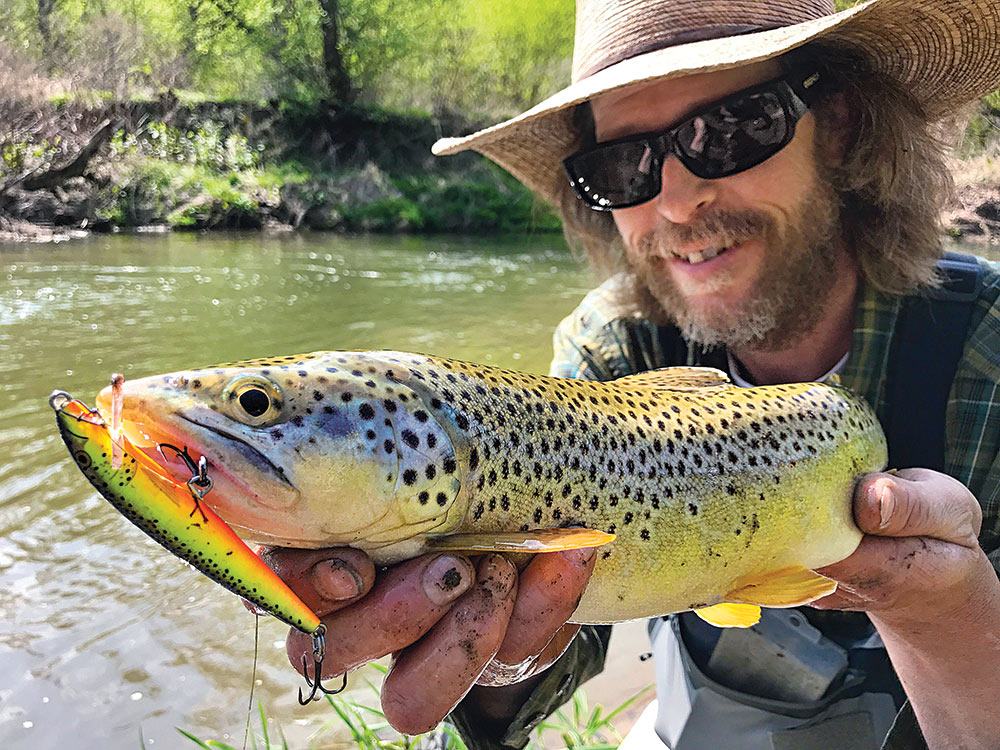
Image via Outdoor Life
Small Stream, Big Brown: Three Practical Tactics for Trophy Trout in Tight Water
Outdoor Life breaks down Dave Strom’s run-and-gun approach to catching monster brown trout in small streams—exactly the kind of fishing that rewards decisiveness over perfection. Big browns in little water don’t behave like eager stockers. They’re territorial, suspicious, and usually positioned where they can feed with minimal exposure.
The playbook centers on efficiency: cover water with purpose, hit high-probability lies, and don’t overstay a spot. In small streams, the best fish often live in the ugliest corners—cutbanks, under roots, deep seams behind boulders—places that demand accurate casts and a low profile. Strom’s approach emphasizes moving like a hunter: stay off skylines, use cover, and treat every step as part of the presentation.
It’s also a good reminder for anyone who’s spent too much time optimizing gear: success is mostly angles, timing, and reading water. A couple smart drifts through the right slot beats fifty hopeful casts to the wrong one.
Source: Outdoor Life
Read the full story at Outdoor Life →

Image via Off Road Xtreme
Palmer Luckey + RealTruck Build a Military-Inspired Silverado for Veterans — Barrett-Jackson With a Purpose
Off Road Xtreme reports that Palmer Luckey and RealTruck have teamed up on a custom, military-inspired Chevy Silverado 1500 Z71 slated for Barrett-Jackson, with proceeds benefiting veterans. It’s part statement piece, part functional build—designed to look the part while still being a real truck, not a trailer queen.
Luckey’s name tends to pull conversations toward defense tech and big ideas, but this project sits in a different lane: culture, community, and fundraising with horsepower. RealTruck brings the aftermarket credibility and execution—where the difference between “concept” and “bid-worthy” is whether the details are done right.
In a market where attention is expensive, this is a smart vehicle (literally) for veteran support: you get a tangible item, a high-visibility auction stage, and a clear beneficiary. It’s also a reminder that the best philanthropy plays don’t feel like obligation—they feel like something you’d genuinely want in your garage.
Source: Off Road Xtreme
Read the full story at Off Road Xtreme →

Image via Golf.com
At Shinnecock, Wyndham Clark Played More Than the Course — He Played the Crowd, Too
Golf.com reports that at the U.S. Open at Shinnecock Hills, Wyndham Clark fought a messy mix: a swing that wasn’t fully cooperating, greens that punish anything timid, and a public image issue he helped create. Shinnecock has a way of stripping players down to what they actually have that week—patience, touch, and emotional control.
The story here isn’t just performance; it’s perception. Fans don’t need a golfer to be perfect, but they do react to body language, decisions, and how a player handles adversity. Clark, by Golf.com’s account, was navigating the tension between competing at the highest level and re-earning goodwill in real time, in front of a crowd that can turn cold fast.
Championship golf often becomes a referendum on temperament. The shots are visible. The self-management is louder than people think. At a venue like Shinnecock, you don’t just play pars—you negotiate them.
Source: Golf.com
Read the full story at Golf.com →
That’s the Brief for Monday. If you’re making decisions this week—on money, travel, or just what to cook on that smoker—keep it simple: watch the plumbing (rates, payments, credit), respect uncertainty, and don’t confuse a calm tape with a safe one. — Cole Hargrove
— Cole Hargrove