Sponsored By:
The Fed held rates, inflation is still above target, and uncertainty is rising — that means the "buy anything AI" trade is over. Smart money is rotating fast toward the companies actually building AI infrastructure: chips, cloud capacity, and mission-critical data tools. Big Tech alone is projected to spend $635B–$665B on AI in 2026 — and not all of it is going where most investors are looking.
We've identified 9 AI stocks worth watching right now — including a lesser-known chip name tied to U.S. AI infrastructure, a cloud player with improving setup, and a data analytics company with government exposure. This isn't hype. It's about following where capital is actually being deployed.
Get the Free Report NowBy clicking the link above, you will receive this free report and a free subscription to the StockEarnings daily email newsletter. You are also agreeing to the terms of our Privacy Policy. Unsubscribe at any time.

Live Well. Invest Smart. No Apologies.

Image via Fox Business
Voters just put a speed limit on AI infrastructure
Local ballot measures aimed at reining in data center growth passed by wide margins, and it wasn’t subtle. The complaints were the ones you’d expect from anyone who’s watched a quiet county get swallowed by industrial-scale development: higher energy bills, land use fights, water questions, traffic, and a creeping sense that the community takes the burden while someone else takes the upside.
This matters because data centers are no longer a niche real-estate story. They are the physical backbone of AI, and AI’s real constraint isn’t hype or code, it’s power, permitting, and politics. When voters start treating server farms like refineries, the timeline for new capacity stretches out, and the cost of capacity goes up.
Markets may still love the AI trade, but this is your reminder that infrastructure always gets priced by voters eventually. If the permitting path hardens, the winners aren’t just the biggest data-center landlords; it’s also the grid players, the efficiency stack, and any company selling “do more with fewer watts.”
🥃 Cole's Take: AI is not getting “banned,” but it is getting “metered.” If you own anything tied to AI capacity, start thinking like a utilities investor: regulatory friction, local politics, and time-to-build are the real variables. The clean play isn’t chasing the next model headline; it’s owning the picks-and-shovels that benefit when constraints make compute more valuable.
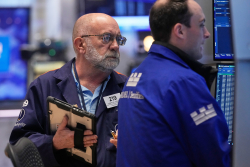
Image via RealClearMarkets
What investors really fear in a Democratic sweep: rules, not rhetoric
The RealClearMarkets piece cuts through the usual election-night theater and points at what actually unnerves capital: policy sequencing and enforcement. Even when the macro numbers look “fine” on the surface, markets can get jumpy if investors think Washington will turn the dial quickly on taxes, energy rules, labor, and antitrust.
A sweep can mean speed. Not necessarily radical new ideas, but fewer brakes, fewer internal negotiations, and faster implementation. That’s where investors start to price in uncertainty premiums, especially for sectors already in the crosshairs: Big Tech, private equity, crypto, and anything carbon-adjacent.
The key takeaway is that markets don’t need a catastrophe to re-rate. They just need the sense that the rulebook is about to change faster than balance sheets can adjust.
🥃 Cole's Take: I don’t fear a party; I fear a rushed rulebook. If you’re positioned for 2027, stress-test your portfolio for higher effective tax drag, tighter M&A, and more enforcement risk in tech and crypto. Keep quality cash-flow names, keep dry powder, and don’t confuse “political certainty” with “market certainty.”
Florida’s new homestead rules: a quiet break for the right homeowners
Kiplinger breaks down what Florida’s new homestead exemption changes could mean for property tax bills, and the headline is simple: more homeowners may get meaningful relief, but only if they understand how exemptions, caps, and eligibility actually work.
Florida property taxes are a game of small print. The difference between an assessed value and a market value, plus homestead protections, can decide whether your tax bill feels manageable or feels like a second mortgage. Any tweak to the exemption can shift incentives for primary residents, snowbirds, and buyers thinking about establishing domicile.
For retirees and high earners moving in, the homestead framework is one of Florida’s strongest “wealth quality-of-life” perks. But you have to file correctly, on time, and you need to think ahead if you’re planning moves, trusts, or second properties.
🥃 Cole's Take: If Florida is on your short list, treat the homestead exemption like a financial instrument, not a civic detail. Run the numbers before you buy, and don’t DIY the residency and filing steps if you’ve got real money at stake. A few hours of planning can save you years of unnecessary tax bleed.

Image via Car and Driver
The 2027 Lamborghini Temerario is a confidence indicator on four wheels
Car and Driver’s overview of the 2027 Lamborghini Temerario reads like a reminder that the ultra-luxury auto world never really stops; it just changes gears. New model cycles at this level are less about transportation and more about brand heat, engineering flex, and a buyer base that wants the newest thing now.
These cars also track a weird but useful economic truth: when high-end demand stays resilient, it tells you affluent consumers are still feeling liquid. That doesn’t mean the broader economy is safe, but it does mean the top slice hasn’t hit the brakes.
For investors, the angle isn’t “buy a supercar.” It’s watching what this says about pricing power, waiting lists, and the health of luxury brands and their financing ecosystems.
🥃 Cole's Take: I watch the ultra-luxury market the way I watch high-yield spreads: it’s a sentiment tell. If Lamborghini can keep demand hot into 2027, the wealth tier is still spending, and that usually supports premium brand equities and luxury-adjacent credit. Just don’t confuse that with a green light for reckless leverage on toys.
A 94-foot “barefoot-luxury” yacht wins FLIBS, and it tells you what the rich want next
Yachting Magazine reports the Azimut Grande 30M took Best of Show at the Fort Lauderdale International Boat Show, spotlighting a first-time collaboration aimed at a modern “barefoot-luxury” vibe. Translation: comfort and design-forward livability are winning over flash-for-flash’s-sake.
Boat shows are more than eye candy; they’re a pulse check on high-end discretionary demand, customization trends, and the global appetite for big-ticket lifestyle assets. When builders lean into layout, usability, and indoor-outdoor flow, they’re following buyers who actually use their toys, not just park them for Instagram.
It also ties back to a bigger theme: affluent consumers want experiences that feel effortless. That preference trickles into everything from travel to real estate to the way people allocate money toward time-saving services.
🥃 Cole's Take: This “barefoot-luxury” shift is the same story I see in prime real estate: less showboating, more livability. If you invest in luxury, look for brands with pricing power and a design language that ages well, not novelty that peaks in one season. And if you’re buying the asset itself, remember the best day to negotiate is when the market is quiet, not when the show lights are on.

Image via The Whiskey Wash
English whisky gets a GI: good for your glass, better for the category
The Whiskey Wash explains what the new English Whisky GI means in practice: rules around what qualifies as English, covering inputs, production, and maturation standards. A GI isn’t just a label; it’s a framework meant to protect quality signals and prevent “English-style” marketing from outrunning the liquid.
For drinkers, the upside is clarity. You’re more likely to get consistent expectations around where it was made and how. For producers, a GI can be a tailwind: it creates a shared identity, helps with export credibility, and gives the category a cleaner story to tell against the giants of Scotland, Ireland, and the U.S.
From a market perspective, this is how new premium segments get built. First comes experimentation, then standards, then branding scale, then collectability.
🥃 Cole's Take: A GI is the adult supervision a young category needs. It won’t guarantee greatness, but it raises the floor and makes “English whisky” investable as an idea, not just a novelty. If you like the space, buy bottles you’ll enjoy drinking and treat any “collecting” upside as a bonus, not a plan.
Cole Hargrove The Balanced Brief Live Well. Invest Smart. No Apologies. I’ll be watching how fast AI infrastructure runs into local permitting walls, and I’ll be sipping something aged long enough to ignore the noise.
— Cole Hargrove