While other sectors stall, AI investment is accelerating — showing up in earnings calls, corporate budgets, and real-world deployment. Capital is quietly concentrating around companies with clear demand and long-term relevance, and selective opportunities are forming right now.
A new research brief identifies 2 AI stocks trading under $15 that may be positioned for the next phase of growth — including key developments that could move these names in the months ahead.
Get the Free AI Stocks ReportBy following the link above, you're choosing to opt in to receive insightful updates from Investing Ideas Daily + 2 free bonus subscriptions! Your privacy is important to us. You can unsubscribe anytime. See our privacy policy for details.

Live Well. Invest Smart. No Apologies.
25 Years Later: We Remember
Twenty-five years ago today, a clear Tuesday morning in New York, at the Pentagon, and in a field near Shanksville, Pennsylvania, split American life into before and after. Nearly 3,000 people went to work, boarded a flight, or reported for duty and never came home. Firefighters, police officers, and paramedics climbed toward danger while others were fleeing it, and 343 FDNY firefighters died doing their jobs. Their families have spent a quarter century living around an empty chair, and many who worked the recovery are still paying for it with their health. Those of us who remember that morning carry it differently than the kids born since, which is exactly why it has to be passed on. Remembering isn't about reliving the fear. It's about honoring people who showed us what courage and service look like, and deciding to live up to that.

Image via City Journal
Private Capital Rebuilt Ground Zero While Government Stumbled
Steven Malanga's piece in City Journal lays out what most people who lived through the aftermath already knew: the government-led effort to rebuild Ground Zero was a mess of bureaucratic delays, political infighting, and half-baked ideas that went nowhere. What actually brought Lower Manhattan back wasn't a committee or a task force — it was private developers, investors, and business owners who rolled up their sleeves and put real capital to work. The broader recovery of New York after 9/11 was driven by the same force that's always driven American resilience: people with skin in the game.
Malanga highlights how private initiative filled the vacuum left by government inertia. While officials argued over memorial designs and transit hubs, private money was flowing into residential conversions, new office towers, and neighborhood revitalization projects that actually made a difference. The rebuild wasn't just about steel and glass — it was about restoring confidence, and that only happens when people are betting their own money on the outcome.
🥃 Cole's Take: This is the story that should've been told louder fifteen years ago. Government is great at ribbon cuttings and terrible at execution — especially when politics gets involved. The people who rebuilt New York were the ones who had the most to lose, and that's always been the difference between rhetoric and results. If you want resilience, bet on private capital every time.

Image via ZeroHedge
Oil Hits $110, Then Craters on Demand Fears and Diesel Crisis
Brent crude flirted with $110 a barrel this week before reversing hard after the International Energy Agency issued a stark demand destruction warning. The spike was driven by renewed Houthi threats to Saudi shipping routes — the kind of geopolitical risk that sends traders into a frenzy. But the retreat was equally sharp once the IEA reminded everyone that high prices kill demand, and that's exactly what's starting to show up in the data. Meanwhile, diesel markets are in full crisis mode, with refining capacity still lagging post-pandemic shutdowns and global supply chains feeling the pinch.
This is the kind of volatility that makes headline writers giddy and portfolio managers nauseous. Energy markets are caught between supply disruption risk and weakening global demand signals. If the Houthis make good on threats or if OPEC gets cute with production cuts, we could see another leg up. But if consumption continues to roll over — especially in China and Europe — the downside is just as real. Diesel shortages, in particular, are a canary in the coal mine for manufacturing and logistics costs.
🥃 Cole's Take: Energy is the one sector where you can't afford to get cute with timing. If you're underweight here, you're gambling that geopolitics stays calm and demand craters — neither is a bet I'd make with house money. Keep exposure, hedge with alternatives, and don't try to be a hero calling tops and bottoms in crude.

Image via Fox Business
Inflation Still Running Hot as Fed Meeting Looms
The August Consumer Price Index came in hotter than anyone wanted to see, with inflation still sitting well above the Fed's 2% target. This sets up an uncomfortable backdrop for the central bank's next meeting, where Jerome Powell and company have to decide whether to keep tightening, hold steady, or risk looking soft on inflation just as it threatens to become embedded in expectations. The Labor Department's numbers show persistent pressure across core categories — housing, services, and food are all sticky, and none of them are cooperating with the soft-landing narrative.
Markets had priced in a pause or even a rate cut by year-end, but this CPI print throws cold water on that scenario. The Fed's in a bind: raise rates further and risk pushing the economy into recession, or hold steady and let inflation expectations drift higher. Neither option is great, and both have consequences for equity valuations, bond yields, and anyone sitting on a pile of cash wondering when it's safe to deploy.
🥃 Cole's Take: The Fed's credibility is on the line, and they know it. If inflation stays elevated into Q4, they'll have no choice but to tighten further — which means the everything rally we've seen in risk assets is living on borrowed time. Stay liquid, keep duration short, and don't be surprised if volatility picks back up in October.
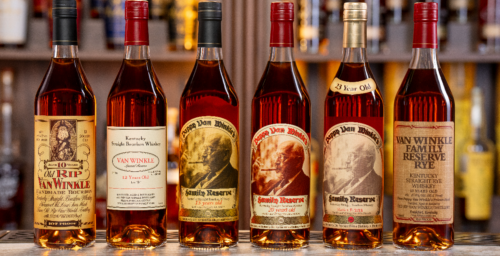
Image via The Whiskey Wash
Pappy Van Winkle 2026 Collection Drops — And It'll Cost You
The 2026 Pappy Van Winkle lineup has been officially revealed, and if you thought last year's allocation was tight, this year's is even more punishing. The six-bottle collection spans the full age range — from the 10-year Old Rip Van Winkle to the legendary 23-year Family Reserve — and retail prices have crept up again, though good luck finding any of these bottles at retail. Most will get snapped up by lottery systems, restaurant buyers, and the secondary market where prices triple before the cork is ever pulled.
This is less about drinking whiskey and more about scarcity economics. Pappy has become a store of value for collectors, a status symbol for bars, and a speculative asset for flippers. The distillery can't make enough to meet demand, won't expand production to protect the mystique, and the result is a market where a bottle of 23-year can fetch $5,000 or more if you know where to look.
🥃 Cole's Take: I love good bourbon as much as the next guy, but Pappy has jumped the shark into pure speculation territory. If you can get a bottle at retail, drink it and enjoy it — that's what it's for. If you're buying it as an investment, you're paying for hype, not juice. There are a dozen other bourbons at a tenth the price that'll treat you just as well.

Image via Outside Online
Chattanooga's Outdoor Scene Is Worth the Detour
Outside Online put together a solid roundup of why Chattanooga has quietly become one of the best outdoor adventure hubs in the South. Designated as America's first National Park City, the town sits at the intersection of the Tennessee River, surrounding ridgelines, and a trail network that rivals anything in Asheville or Boulder. Rock climbing at Sunset Rock, paddleboarding the gorge, mountain biking on Signal Mountain — it's all within a 20-minute drive of downtown, and the infrastructure to support it has matured fast.
What makes Chattanooga work is that it's not trying to be the next Austin or Denver. It's a mid-sized city that leaned into its natural assets without the pretension or overcrowding that's ruined other outdoor towns. You can hike all morning, grab lunch at a brewpub, and still make a tee time in the afternoon. The cost of living is reasonable, the pace is sane, and the access is unbeatable.
🥃 Cole's Take: If you're thinking about a second property or a place to spend more time outside the grind, Chattanooga deserves a look. It's got the outdoor access of Colorado without the altitude or the crowds, and the real estate market hasn't gone full stupid yet. Worth a long weekend to see if it fits.
MasterCraft Pro Ski Tour Hits Florida Next Week
The MasterCraft Pro Ski Tournament is back in Florida September 18–20, this time at a brand-new venue in Auburndale called Champions Lake. Three days of world-class slalom, trick, and jump skiing — the kind of competition that reminds you waterskiing is still an actual sport, not just something college kids do behind a pontoon boat. The venue change is a big deal for competitors; Champions Lake offers glassy conditions and a layout built specifically for tournament-level skiing.
If you've never watched professional waterskiing, it's worth catching once. The precision required at top speeds, the athleticism in the air during jumps, and the razor-thin margins in slalom runs make it one of the most underrated sports out there. MasterCraft's sponsorship has kept the tour alive while other power sports have faded, and the brand's boats are still the gold standard for serious skiers.
🥃 Cole's Take: This isn't mass-market entertainment, but if you're near Central Florida that weekend and appreciate skill over spectacle, it's a solid way to spend a Saturday. Waterskiing culture has a lot in common with golf — tradition, precision, and a crowd that actually knows what they're watching. Plus, you can't beat Florida in September if the humidity breaks.
Stay sharp. Protect what you've built. And take time this weekend to remember what really matters. — Cole
— Cole Hargrove