Tax season quietly reshapes where capital flows — refunds hit accounts, portfolios get rebalanced, and positions get liquidated to cover obligations. That creates unusual early movement in small-cap stocks that has nothing to do with company fundamentals. Right now, certain names are already showing structural signals most investors will miss entirely.
We've put together a free Market Structure Guide breaking down how tax season shifts market activity, why some small-cap profiles move unexpectedly in March and April, and three companies already showing early breakout signals. The window to act before broader attention arrives is narrow — don't wait.
Get the Free Market Structure Guide*We encourage readers to perform their own research and due diligence on any information we provide. By clicking the link you will automatically be subscribed to the Fierce Investor Newsletter. Privacy Policy

Live Well. Invest Smart. No Apologies.

Image via Bloomberg
Asia’s AI Boom: Tech Titans Up, Humans Down (If You’re in the Middle)
Asia’s AI trade is hardening into something bigger than a theme—it’s becoming a market structure. The winners aren’t just “AI companies,” they’re the platforms and supply chains that can compound scale: cloud, chips, memory, advanced packaging, and the boring-but-critical infrastructure that makes model training cheaper next quarter than it was last quarter. The result: Asia tech stocks are getting pulled into “must-own” territory for global funds, the same way U.S. megacaps did in the 2010s.
On the flip side, the newsletter points to the quiet squeeze happening inside finance itself. Bankers aren’t being replaced by some dramatic robot coup. They’re being decomposed into tasks—screening, drafting, pricing comps, diligence checklists—and those tasks are being automated. The top rainmakers and true relationship operators will keep eating. The middle—the people who used to grind out process work and “become directors one day”—is where the floor is dropping out.
🥃 Cole's Take: If you own broad Asia exposure, check whether you’re actually getting the AI supply chain or just old-economy index ballast. And if you’re in professional services—banking, law, consulting—assume your job is now a product: it will be unbundled, automated, and repriced. Adapt upward (relationships + judgment) or sideways (build tools), because “doing the deck” isn’t a career anymore.

Image via TheStreet
Jim Cramer’s Four Words and the AI-Chip Attention Tax
TheStreet leans into a timeless Wall Street reality: most investors don’t read reports, they read signals. A TV personality drops four words on an AI chip name and the market hears a starter pistol. That’s not because fundamentals stopped mattering—it’s because attention is now a form of liquidity, and liquidity moves price long before spreadsheets do.
The bigger point is the language gap: analysts write for committees, not humans. Meanwhile the retail and fast-money crowd trades headlines, momentum, and narrative arcs—especially in AI semis, where “one design win” can re-rate a company before the revenue even shows up. In that environment, sound bites can be catalysts, and catalysts can become self-fulfilling for a while.
🥃 Cole's Take: Treat media calls like weather—useful to know, dangerous to obey. If you’re playing AI chips, define your time horizon before you buy: trader rules (tight risk, fast exits) or investor rules (cash flows, margins, cycle awareness). Mixing the two is how grown men end up rage-selling from a golf cart.
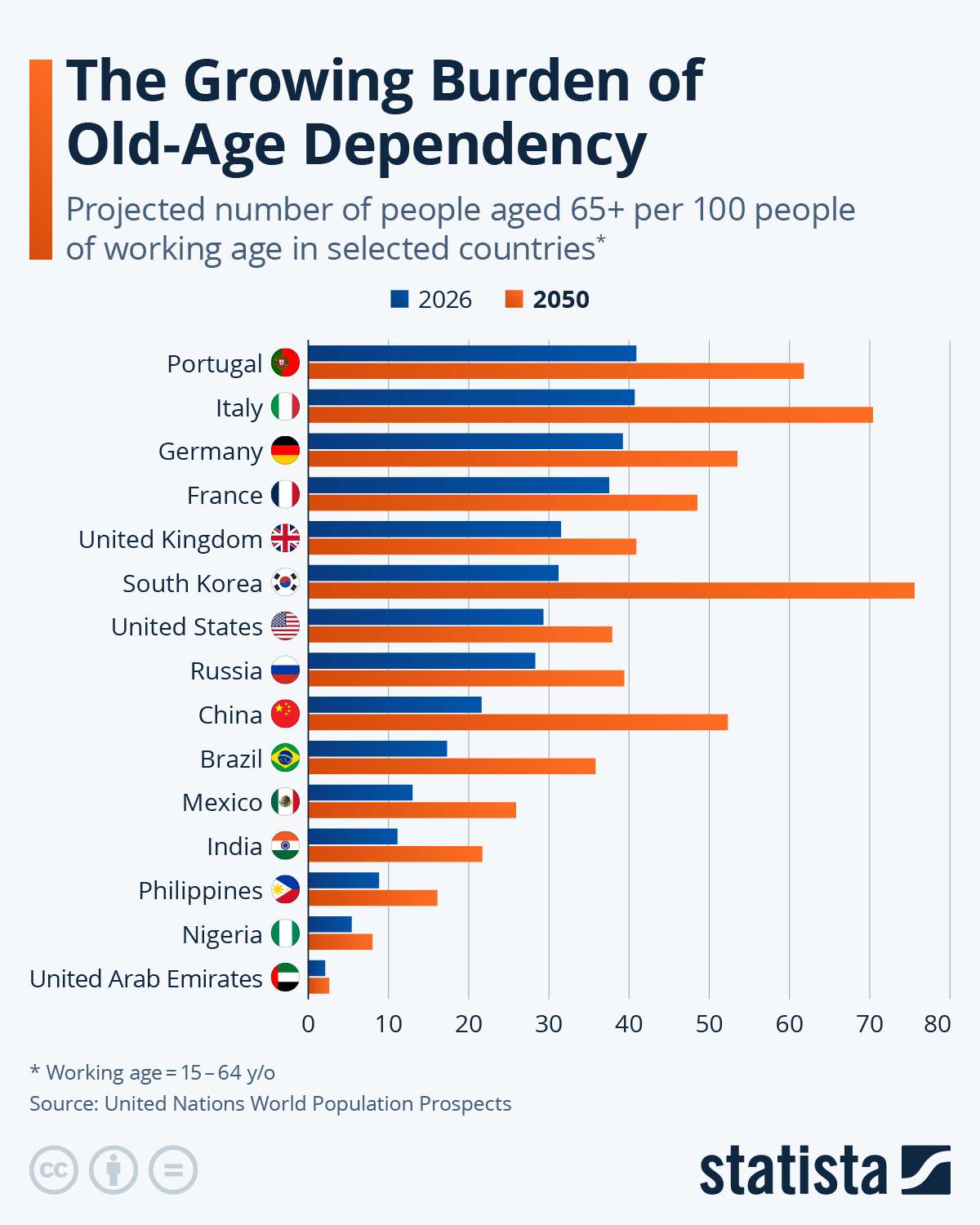
Image via ZeroHedge
Old-Age Dependency: The Slow-Motion Crisis That Will Move Markets
ZeroHedge flags the rising old-age dependency ratio—more retirees supported by fewer working-age taxpayers—as one of the defining pressures of the next two decades. This isn’t just a “pensions will be tight” problem. It hits labor supply, wage inflation, healthcare demand, tax policy, housing turnover, and ultimately growth rates.
Countries facing the sharpest shifts will have ugly choices: raise retirement ages, cut benefits, inflate the debt away, import labor, or accept lower living standards. None of those are politically clean. And markets don’t need the final outcome to price risk—they just need to smell fiscal stress and policy volatility.
🥃 Cole's Take: Demographics are destiny, but they don’t move in straight lines—they lurch when politics panics. Position for it with businesses that monetize aging (select healthcare, devices, managed care, diagnostics) and with a real plan for inflation resilience. And if your retirement plan assumes “the government will handle it,” you’re outsourcing your future to a committee that can’t pass a budget.

Image via Car and Driver
Ram Brings the Sting: 2027 Ram 1500 Rumble Bee Targets Ford’s Street-Truck Game
Car and Driver reports Ram is leaning hard into street-truck culture with the 2027 Ram 1500 Rumble Bee, a modern nod to the old Dodge attitude—low stance, loud visuals, and performance-first swagger. The backdrop matters: Ram went from a V-8 gap to suddenly having multiple V-8 options again, and it’s moving to fill the emotional hole left by muscle cars getting regulated into history.
This is more than a trim package war. Street trucks are a margin story—special editions, option bundles, lifestyle branding, and the kind of customer who finances the extras without blinking. Ford’s F-150 Lobo has been grabbing that “urban performance truck” mindshare, and Ram clearly wants its cut.
🥃 Cole's Take: Automakers are telling you what the consumer still wants: character you can park in the driveway. If you invest in autos, watch where pricing power survives—trims and packages that sell identity, not transportation. And personally? If it sounds good, looks mean, and hauls a smoker and golf clubs, it’s doing more than 90% of “innovation” on an earnings call.
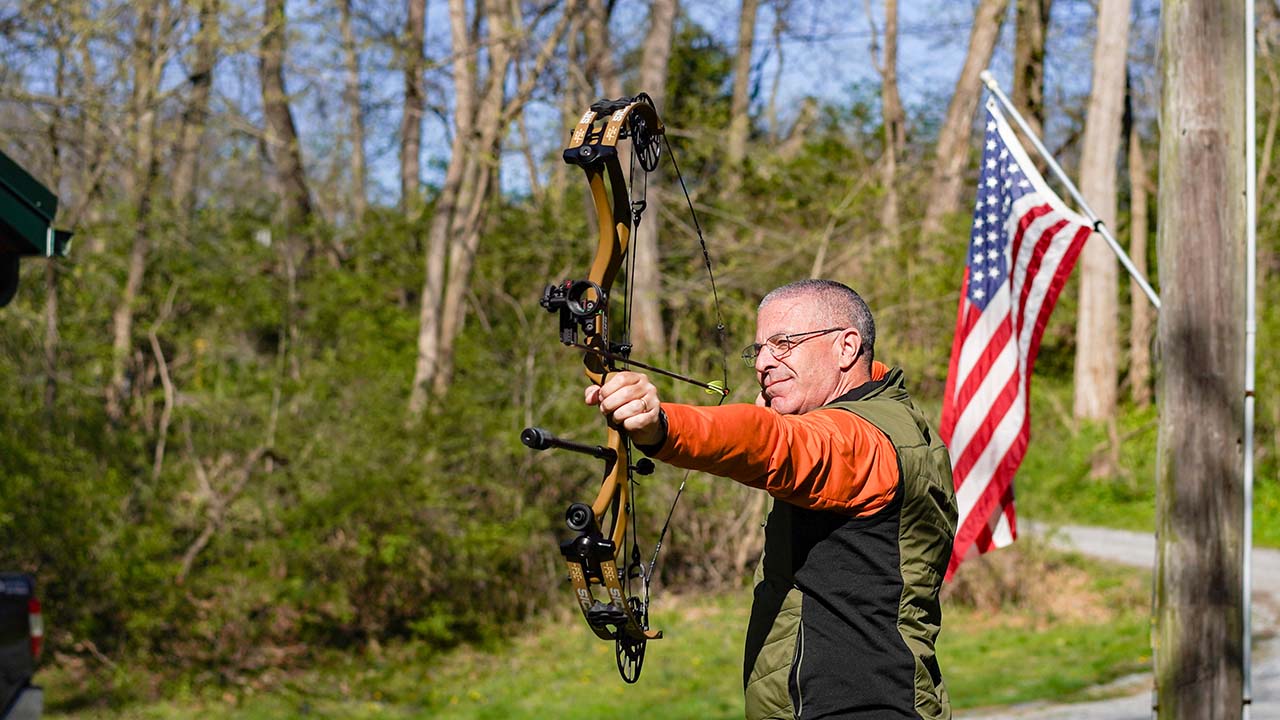
Image via Outdoor Life
PSE Sicario: A Speed Bow That Actually Acts Like a Precision Tool
Outdoor Life’s review calls the PSE Sicario the best speed bow they’ve tested—rare praise in a category where “speed” often means “temperamental.” The claim here is that PSE found a sweet spot: blistering arrow speeds without turning the bow into a twitchy science project that punishes imperfect form.
That matters because speed isn’t just ego—it buys forgiveness in real hunting situations: ranging errors, wind, awkward angles, and adrenaline. A faster setup can flatten trajectory and tighten the margin for mistakes, as long as it stays tunable, consistent, and comfortable enough to practice with all summer.
🥃 Cole's Take: Gear that makes you practice more is worth more than gear that wins spec-sheet arguments. If the Sicario is as stable as the review suggests, it’s the rare “fast” bow that won’t cost you animals because you dreaded shooting it. Just remember: confidence is the real velocity—speed only helps if you’ve got reps.

Image via Popular Mechanics
Warp Drive “Loophole”: Cute Physics, Serious Implications (Eventually)
Popular Mechanics covers research suggesting a physical warp drive might not be outright impossible—if you exploit a loophole in the math. The idea, in plain terms: instead of moving a ship faster than light, you manipulate spacetime around it—compress in front, expand behind—so you ride the distortion. Past proposals ran into problems like exotic energy requirements; this new work argues there may be more physically plausible configurations than we assumed.
Before anyone books a tee time on Proxima Centauri: this is still deep in theory land. But theoretical shifts matter because they change what engineers even attempt. Today it’s equations. Tomorrow it’s materials science experiments. Decades from now—maybe—it’s propulsion prototypes.
🥃 Cole's Take: Don’t invest on warp-drive headlines, but don’t laugh them off either—breakthroughs start as “impossible” until they aren’t. The nearer-term investing lesson is simpler: fundamental physics is a long-dated call option on civilization. If you want exposure, look downstream—materials, energy storage, superconductivity, advanced manufacturing—not science-fair hype.
Protect the downside. Enjoy the upside. I’ll see you out there—somewhere between the fairway and the firebox.
— Cole Hargrove