September is packed with catalysts — earnings, FDA decisions, AI breakthroughs, commodity moves — and for small-cap investors, a single one can change everything. RushTheStreet tracks AI disruptors, biotech companies nearing major inflection points, gold & silver explorers, and emerging small caps the mainstream market is still sleeping on.
No crowded mega-cap watchlists. No waiting for the headlines. Just high-potential opportunities before they become impossible to ignore. September has 30 days. The next market mover only needs one of them.
Join RushTheStreet FreeBy clicking the link above, you agree to receive emails from rushthestreet.com. You can opt out at any time. — Privacy Policy

Live Well. Invest Smart. No Apologies.

Image via MarketWatch
Record Diesel Prices: The Inflation You Can’t Spin Away
If you want to find the pressure points in the economy, follow diesel. It’s the fuel behind trucks, construction equipment, farm machinery, and a lot of the quiet logistics that keep shelves stocked. When diesel hits record levels and stays there, it doesn’t just sting at the pump; it shows up in freight surcharges, delivered input costs, and ultimately the price tags consumers see a month or two later.
Markets tend to treat diesel as a second-order detail compared to crude headlines, but it’s a first-order driver of sticky inflation. High diesel keeps the “last mile” expensive, and that makes it harder for inflation to fall cleanly. The pain bleeds into transport-heavy stocks, industrials, retailers with thin margins, and anyone promising the Street they can “manage costs” while their suppliers quietly reprice everything.
🥃 Cole's Take: Diesel is one of those signals I respect because it hits cash flows fast and excuses don’t work. If diesel stays elevated, I’m cautious on margin-dependent consumer names and I lean toward pricing-power businesses and select energy exposure rather than broad-market optimism. And if you’re waiting for rate cuts to save a weak balance sheet, diesel is the kind of real-world input that keeps that hope on a short leash.
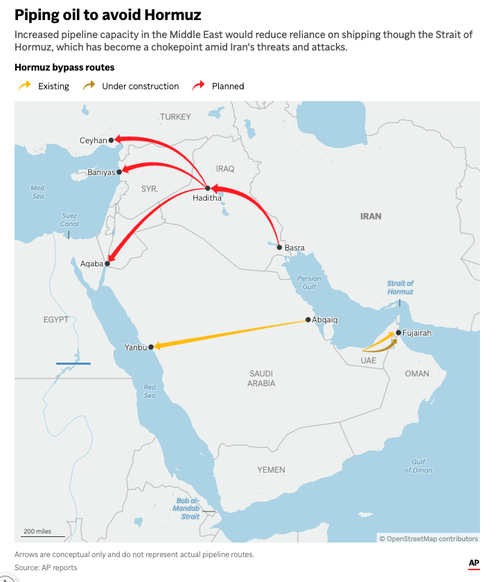
Image via ZeroHedge
Hormuz Isn’t a Soundbite: Qatar Pushes Back on ‘Worthless’ Claims
Qatar’s energy minister publicly swatting down comments about the Strait of Hormuz should remind everyone that energy geopolitics doesn’t care about messaging calendars. Hormuz is still the narrow choke point where markets can go from calm to chaos in a weekend. When senior officials start trading words, it’s less about who “wins” the argument and more about what risk premium gets embedded into global oil and LNG flows.
The bigger issue is fragility: supply chains are already dealing with high transport costs and uneven demand, and energy is the one input that can reprice instantly. Even without a disruption, the mere perception of elevated risk can keep insurance, shipping, and forward contracts expensive. That’s inflationary gravity, and it tends to show up when everyone’s pretending the coast is clear.
🥃 Cole's Take: I don’t trade headlines; I price regimes. When Hormuz rhetoric heats up, I assume volatility is underpriced somewhere, and I look at energy exposure as portfolio insurance, not a political statement. If you’ve built a plan that only works in a low-volatility, low-energy-cost world, you don’t have a plan—you have a fair-weather story.
No AI Liability Shield: Washington Signals a Different Kind of Tech Cycle
Treasury Secretary Scott Bessent telling CNBC the administration won’t grant AI leaders a liability shield is a clean message: build it, but you own it. That matters because the last decade trained big tech to expect regulatory friction that mostly ends in fines and consent decrees. AI is different; it touches safety, employment, security, and fraud in a way that will pull legal exposure forward, not push it out.
The knock-on effect for markets is straightforward. If liability risk is real, compliance budgets rise, rollout timelines stretch, and smaller players may struggle to insure or defend themselves. Meanwhile, the summit dynamics with China add a second layer: AI will be treated like strategic infrastructure, not just software. That usually means more rules, more audits, and more winners determined by execution and political durability, not just innovation.
🥃 Cole's Take: If you’re investing in AI, separate “tools that save money today” from “moonshots that invite lawsuits tomorrow.” I like picks-and-shovels that sit under enterprise adoption—security, governance, data plumbing, verification—because regulation tends to create demand for those. The easy-money phase of AI hype is over; the defensible, cash-flow phase is what I want to own.
📎 CNBC

Image via Robb Report
A $35 Million Beverly Hills Spec Mansion With Rooftop Pickleball: Peak Luxury, or Just the New Normal?
A brand-new Beverly Hills spec home asking $35 million, complete with a rooftop pickleball court and a live banyan tree in the foyer, is the kind of listing that makes people roll their eyes—and then quietly check comps. It’s also a useful temperature gauge. Ultra-high-end real estate doesn’t move on the same schedule as the rest of housing, but it does reflect liquidity, confidence, and how much “asset-rich” buyers still feel like spending.
Features like rooftop courts aren’t just novelty; they’re signaling what sells: privacy, experience, and status packaged as lifestyle. When luxury is still being engineered at this level, it tells me the top end hasn’t run out of bid yet. That doesn’t mean the broader housing market is fine. It means wealth concentration remains a powerful force, and developers are still betting that certain zip codes are their own asset class.
🥃 Cole's Take: I don’t buy trophy real estate for appreciation fantasies—I buy it for utility, tax planning, and the kind of enjoyment you can’t get from an ETF. As a market signal, listings like this tell me there’s still a lot of money looking for a home, literally and figuratively. If you’re sitting on high-quality property with low leverage, don’t let everyday housing headlines talk you into a panic sale.

Image via GOLF.com
MacIntyre vs. the Rulebook: When Golf Turns on One Bad Ruling
Robert MacIntyre’s frustration over an embedded-ball ruling at the BMW PGA Championship is the kind of moment every serious golfer recognizes: one decision, one drop, one interpretation, and suddenly your rhythm is gone. The rulebook is supposed to protect fairness, but in the heat of competition it can feel like the sport is asking players to litigate while they’re trying to score.
For fans, these episodes are a reminder that golf’s difficulty isn’t just the shots—it’s the mental load. Pros manage nerves, conditions, and expectations, and then have to absorb rulings that can swing momentum. Whether the call was technically correct or not, the bigger question is how the game communicates and applies rules consistently so the competition doesn’t feel arbitrary.
🥃 Cole's Take: Golf needs rules, but it also needs fewer “gotcha” moments that hijack tournaments. If the average scratch player can’t understand a ruling in real time, the system is too cute. I’m all for protecting the field, but the product gets better when players are deciding outcomes with shots, not with debates.
📎 GOLF.com
Boat Engine Choices: The Quiet Decision That Determines Your Whole Season
Choosing a boat engine is like choosing a business partner: you won’t think about it much when it’s working, and it will dominate your life when it’s not. The smart considerations go beyond peak rpm and top-end speed. Weight, torque curve, fuel efficiency at cruise, service network, corrosion resistance, and how the engine matches your hull and typical load all matter more than the bragging rights you’ll use once at the dock.
The overlooked angle is total cost of ownership. A slightly pricier engine with better parts availability and a stronger dealer network can save you weeks of downtime in peak season. And downtime is the one thing money can’t buy back when the weather’s perfect and your buddies are already on the water.
🥃 Cole's Take: Buy the engine that fits how you actually boat, not how you talk about boating after two bourbons. I’ll take reliability and serviceability over an extra few knots every day of the week. If you’re torn, choose the option that keeps you off the trailer and on the water—because that’s the whole point.
That’s the boardroom view and the back-porch view in one read: watch diesel like a hawk, treat AI like regulated infrastructure, and don’t confuse luxury signals with broad prosperity. I’ll be checking futures before sunrise, then letting the smoker do its work—slow, steady, and intentional.
— Cole Hargrove