History shows a clear pattern: the investors who recognized the exact inflection point in the dot-com boom pocketed 400–800% gains in 18 months. Those who spotted the same moment in cloud computing saw 300–600% returns. Based on 50 years of market data, that same moment is happening right now — and the acceleration phase has already begun.
This free 7-page report reveals where we are in the current megatrend cycle, why the next 18 months are critical, and how to position yourself before the window closes. Don't be the investor who enters too late.
Get the Free ReportBy clicking 'Get the Free Report' you are automatically subscribing to Darwin Investor Network and will receive a free subscription to the Chaikin PowerFeed newsletter. Unsubscribing is easy. Privacy Policy

Live Well. Invest Smart. No Apologies.

Image via Fox Business
Trump Wants Hollywood Back on American Soil
The former president is pushing for a bipartisan federal tax incentive aimed at bringing film and television production back to the United States. It's a direct response to decades of runaway production — studios chasing cheaper labor and sweeter tax deals in Canada, the UK, and Eastern Europe. Hollywood groups and lawmakers are backing the idea as production jobs continue bleeding overseas.
The pitch is simple: match or beat the incentives other countries offer, and keep the work stateside. It's not a new problem, but it's gotten worse. Georgia and Louisiana have held their own with state-level credits, but without federal coordination, productions still shop globally. This proposal aims to level that playing field.
Whether it gets traction depends on how much appetite Congress has for subsidizing an industry that's politically polarizing and economically concentrated in blue states. But the underlying economics are sound — production jobs are high-paying, and they ripple through local economies in ways that matter.
🥃 Cole's Take: I'm not in the business of cheering for subsidies, but this one makes sense if you care about keeping skilled labor and capital investment domestic. Film production is a mobile industry, and we've been losing it for years because we refused to compete on incentives. If we're serious about reshoring anything, this is lower-hanging fruit than semiconductors.
Ten-Year Treasury Hits Highest Yield Since January as Oil Spikes
The 10-year Treasury yield climbed Tuesday to its highest level in eight months, driven by renewed tensions in the Middle East and a jump in crude prices. When oil moves, inflation expectations follow, and bond traders are pricing in the risk that the Fed's work isn't done. We've been in a low-volatility cruise for months — that may be ending.
Higher yields mean higher borrowing costs across the board: mortgages, auto loans, corporate debt. If this move sticks, it puts pressure on equities, especially growth names that were priced for a world where money stayed cheap forever. The bond market is sending a signal, and it's worth listening to.
This isn't panic yet, but it's a warning shot. If oil stays elevated and inflation data firms up, the narrative shifts fast. We've seen this movie before.
🥃 Cole's Take: When the 10-year moves like this, it's not noise — it's the market repricing risk. If you've been overweight growth stocks or levered plays, now's the time to check your exposure. Higher yields don't kill portfolios, but they do punish the ones that aren't built for it.
📎 CNBC

Image via MarketWatch
Vanguard Invented Index Investing — But What Happens When Everyone Does It?
Vanguard's S&P 500 index fund revolutionized investing by making diversification cheap and accessible. It democratized the markets in ways that mattered. But now that indexing has become the dominant strategy — trillions of dollars flowing passively into the same 500 names — some are asking whether the market still functions the way it's supposed to. When everyone owns everything, price discovery gets strange.
The concern isn't theoretical. Passive flows have created a world where capital allocation is driven less by fundamentals and more by index membership. If a stock gets added to the S&P, it rallies not because of earnings, but because billions in index funds have to buy it. That's not a market — that's a mechanical process.
There are alternatives gaining traction: equal-weight strategies, factor-based indexing, thematic ETFs. The idea is to capture diversification without surrendering all judgment to market cap. It's not a revolution, but it's a recognition that indexing at scale creates its own distortions.
🥃 Cole's Take: I still think broad index exposure belongs in most portfolios, but pretending it's risk-free or perfectly rational is naive. When passive strategies dominate, active opportunities emerge — especially in smaller caps and overlooked sectors. If you're only indexing, you're outsourcing all your thinking to a committee at S&P.

Image via Backpacker
Grand Canyon Flash Flood Forces Air Evacuation at Phantom Ranch
David Gregory was at Phantom Ranch, deep in the Grand Canyon, when the floodwaters hit. He described it as a monsoon — sudden, violent, and unstoppable. The Colorado River rose fast, cutting off routes and forcing an emergency air evacuation of dozens of hikers and ranch staff. Helicopters shuttled people out in waves while water turned trails into rivers.
Flash floods in the Canyon aren't rare, but they're unpredictable and deadly if you're caught in the wrong drainage at the wrong time. Phantom Ranch sits at the bottom, surrounded by slot canyons and steep terrain. When water comes, there's nowhere to go but up — and that takes time you don't always have.
Gregory and his group got out safe, but it's a reminder that backcountry travel comes with real consequences. Weather windows close fast, and the land doesn't negotiate.
🥃 Cole's Take: If you're going into the Canyon — or any deep desert drainage — you check the forecast, you watch the sky, and you have an exit plan. Nature doesn't care about your itinerary, and a helicopter rescue isn't guaranteed. Respect the terrain or stay home.
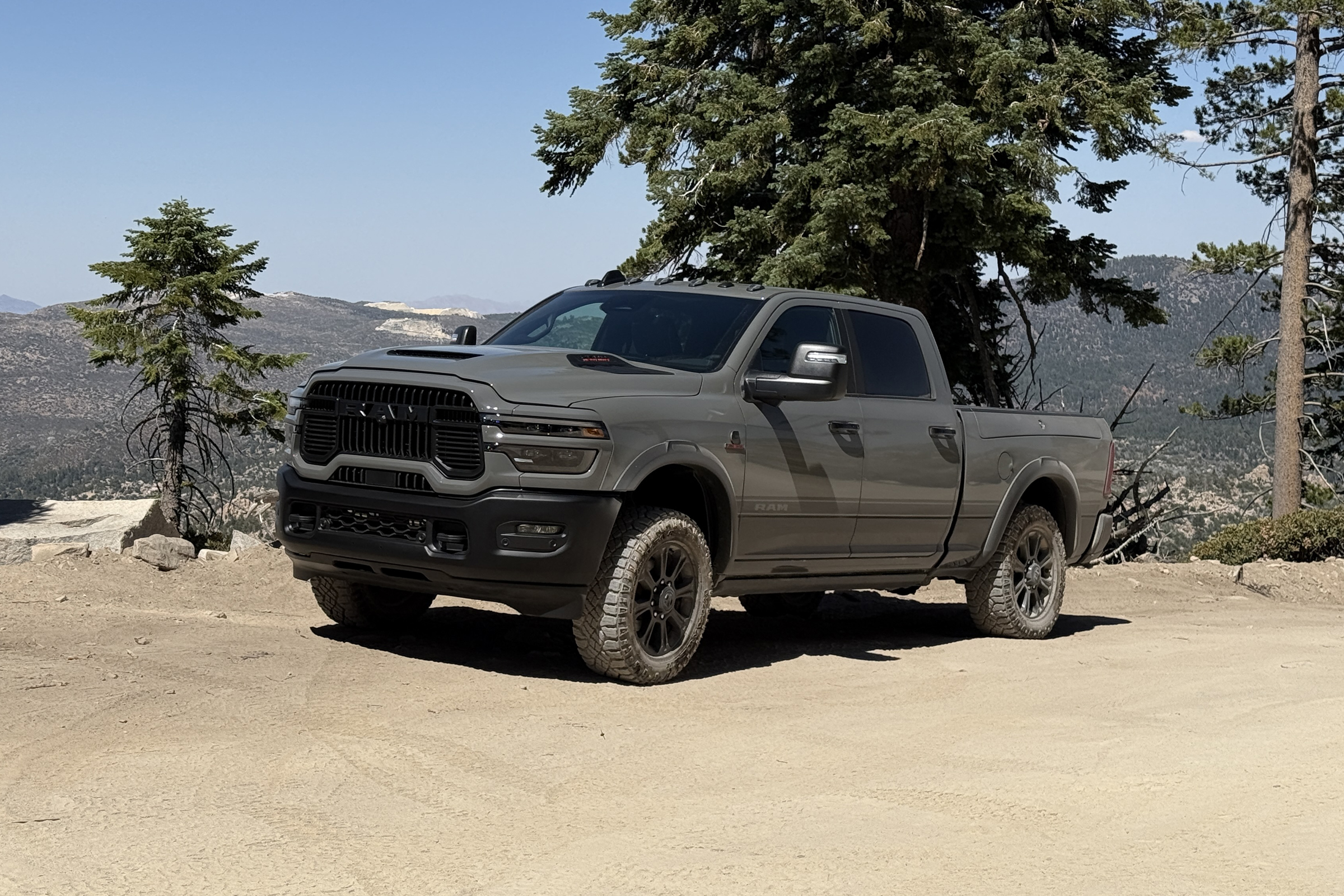
Image via Off-Road Xtreme
Ram's 2500 Rebel Now Delivers 1,075 Lb-Ft of Cummins Torque
The 2026 Ram 2500 Heavy Duty Rebel pairs serious off-road capability with the kind of torque that makes towing feel effortless. The Cummins inline-six now cranks out 1,075 lb-ft, which is absurd in the best way. Add in the Rebel's suspension package, skid plates, and 35-inch tires, and you've got a truck that can pull a loaded trailer through rough country without breaking a sweat.
This isn't a pavement queen. The Rebel is built for people who actually use their trucks — ranch work, long hauls with a fifth-wheel, fire roads that chew up stock suspensions. The interior is comfortable enough for highway miles, but the focus is capability, not luxury.
Ram's betting that buyers want maximum capability without stepping up to a 3500 or sacrificing off-road manners. Based on the specs, they're probably right.
🥃 Cole's Take: If you're in the market for a heavy-duty truck and you actually use it for work or play, the 2500 Rebel is worth the look. That Cummins torque is as good as it gets, and the Rebel package gives you the off-road hardware without the brodozering nonsense.

Image via Car and Driver
Bentley Finally Built a Car for the Track — The 2027 Supersports
Bentley has always made fast, heavy luxury coupes. The 2027 Supersports is different — it's the first one that feels like it was designed for a racetrack instead of a country estate. Extensive weight reduction, revised suspension geometry, and a track-tuned powertrain turn the Continental into something sharper and more focused. It's still a Bentley, which means it weighs more than a Porsche 911, but the handling is genuinely impressive.
This is Bentley responding to a market that wants performance credibility, not just straight-line speed. Competitors like the AMG GT and the Aston Martin Vantage have set the bar, and Bentley needed an answer that didn't feel like a luxury barge with a big engine.
The Supersports won't sell in huge numbers, but it redefines what Bentley is capable of. That matters for brand perception, and it matters for resale value down the line. Halo cars have a way of lifting the whole lineup.
🥃 Cole's Take: If you've got the capital and you want a GT that can actually handle a track day without embarrassing itself, the Supersports delivers. It's not cheap, but Bentley never is. What's new is that you're paying for real performance engineering, not just leather and wood.
Stay sharp. The market's moving, nature's not negotiating, and the machines keep getting better. — Cole
— Cole Hargrove