Oil markets are shifting as Venezuela's disruption removes critical barrels while spare capacity shrinks. Supply pressure is building before headlines catch up — and smart traders are positioning now.
Our exclusive briefing reveals three energy stocks emerging from this supply shock, plus the key signals to monitor as this setup evolves. This is about preparation, not prediction.
Get the Free Oil Trading ReportBy following the links above, you're opting in to receive valuable updates from Wealthiest Investor News plus 2 bonus subscriptions. Your privacy is important to us. You can unsubscribe anytime. See our privacy policy for details.

Live Well. Invest Smart. No Apologies.
Image via Yahoo Finance
Meta’s Next Act: A Cloud Business Built for the AI Arms Race
Meta is reportedly laying groundwork for a cloud computing business—an ambitious pivot for a company that’s historically been a buyer of hyperscaler capacity, not a seller. The timing makes sense: AI training and inference are eating the world’s compute budget, and the winners aren’t just the model-makers—they’re the ones renting out the shovels.
If Meta does this, it’s not trying to out-AWS AWS on day one. The more likely angle is specialized infrastructure: AI-optimized compute, tight integration with Meta’s own tooling, and pricing that undercuts incumbents while leaning on Meta’s scale and custom silicon ambitions. The question is whether enterprises trust Meta with mission-critical workloads—and whether regulators will view “social + ads + cloud” as a tidy little flywheel that needs a leash.
There’s also a quiet capital-markets angle: cloud revenue is the kind of recurring, higher-multiple business Wall Street loves. If Meta can credibly position cloud as a durable second engine (beyond ads), it changes the narrative from “cyclical ad machine” to “platform with multiple toll booths.”
🥃 Cole's Take: This is Meta doing what smart operators do after they’ve printed money in one lane: they build the next lane before traffic slows. I wouldn’t bet against the engineering, but I would absolutely discount the customer-trust problem—CIOs don’t forget decades of privacy headlines. As an investor, I’m watching for one thing: proof they can sell AI infrastructure outside their own four walls without lighting cash on fire.

Image via Fox Business
Quiet Hours at Sephora: Retail Finally Figures Out Luxury Is a Feeling
Sephora is rolling out “quiet hours” across U.S. stores, dialing down music, screen activity, and scents to create a calmer shopping environment—especially for sensory-sensitive customers. It joins the broader trend you’ve seen at Walmart and Target: making physical retail less chaotic and more human.
On the surface, it’s customer care. Underneath, it’s strategy. Brick-and-mortar has to win on experience now, not just inventory, and “less overstimulation” is a real differentiator when every product can be price-compared in five seconds on a phone. For beauty specifically, lowering the sensory noise is almost counterintuitive—fragrance and flash are part of the category’s DNA—but it also signals confidence: they’re choosing comfort over theatrics.
The bigger tell is what retail is optimizing for in 2026: dwell time, conversion, and loyalty in a world where people are tired. Quiet hours are a cheap operational tweak with potentially meaningful brand upside, especially if it’s executed consistently and not treated like a PR checkbox.
🥃 Cole's Take: This is smart retail, period. If you want repeat customers with real spending power, you make it easy to stay in the store—and hard to feel like you need to escape. Expect more “calm commerce” moves across categories, and expect the brands that get it right to quietly take share from the ones still blasting noise like it’s 2004.
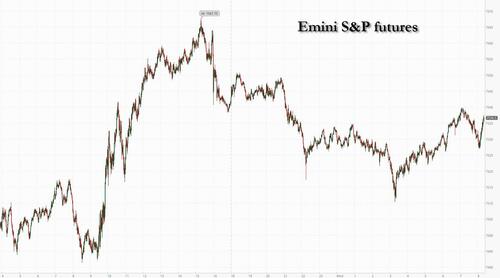
Image via ZeroHedge
Futures Slip Into Q3: The Market’s Still Allergic to Surprise
U.S. equity futures pointed lower to start the new quarter as investors lined up for the next batch of macro headlines and commentary—one of those mornings where positioning feels cautious and everyone’s watching everyone else. When risk gets repriced, it’s rarely because the sky is falling; it’s because the crowd realizes it’s standing too close to the edge.
The mention of upcoming remarks and the Sintra backdrop is a reminder that markets still trade the Fed’s shadow—even when the data matters more than the speeches. The “soft start to Q3” vibe is often about two things: rebalancing flows and a late-breaking realization that valuations don’t grant immunity. If you’ve lived through dot-com, ’08, and COVID, you know the pattern: markets don’t warn you with sirens; they whisper with widening spreads and cranky futures.
What matters now is whether the next wave of macro signals confirms a cooling economy without a profit collapse. If earnings durability holds, dips are opportunities. If margins start cracking and credit tightens at the same time, that’s when the game changes.
🥃 Cole's Take: I treat mornings like this as a temperature check, not a prophecy. When futures are soft into a new quarter, I’m hunting for quality names I already wanted—just with better entry points—and I’m trimming anything that only works if the market stays euphoric. Stay liquid enough to act, and stubborn enough not to panic.

Image via Robb Report
The New BMW X5: Five Powertrains, One Message—Flexibility Wins
BMW’s radically redesigned X5 is coming with five different powertrain options, with deliveries expected to begin in October. That’s not just a product update—it’s a market read. Consumers want choice, governments want electrification, and nobody wants to be trapped in a single technology bet that ages poorly.
A multi-powertrain lineup acknowledges the reality on the ground: charging infrastructure is uneven, fuel prices swing, and buyers’ use cases vary. BMW is effectively saying, “Pick your future,” whether that’s gas, hybrid, plug-in hybrid, or full electric flavors depending on the final mix. It’s also a hedge against policy whiplash and consumer sentiment swings—two things that have been as predictable as Tennessee weather.
From a luxury-market standpoint, the X5 remains a status-and-utility sweet spot: family-friendly without feeling like you surrendered your taste. The redesign and breadth of options are about keeping that crown while competitors fight over what “premium” means in an EV-first world.
🥃 Cole's Take: This is BMW playing offense with optionality, and I respect it. The companies that survive transitions aren’t the ones who preach—they’re the ones who give customers a clean on-ramp. If you’re watching the auto space as an investor, bet on manufacturers that can sell profitably across multiple drivetrains while the world argues about the “one true” path.

Image via Outside
Cherry Springs State Park: Five Hours From Millions, a Universe Away From Noise
Cherry Springs State Park in Pennsylvania is one of the country’s early dark-sky destinations, and it’s close enough to be within a five-hour drive for roughly 47 million people. That’s the magic: accessibility without the usual glow of civilization washing the stars into oblivion.
Outside’s look at the park captures what people forget until they’re standing in it—darkness is an asset. When the sky actually shows up, the Milky Way stops being a phone wallpaper and turns into a reality check. It’s also a reminder that the best “luxury” isn’t always a resort receipt; sometimes it’s a lawn chair, a thermos, and the kind of silence that makes your shoulders drop.
For anyone balancing work, wealth, and sanity, dark-sky trips are high-return travel. They’re cheap compared to most getaways, restorative in a way a city weekend rarely is, and they leave you with something better than photos: perspective.
🥃 Cole's Take: If you’ve been grinding and calling it a lifestyle, put a dark-sky weekend on the calendar. The market will be there Monday; your sense of scale might not be if you never step outside the glare. Cherry Springs is the kind of trip that makes you invest smarter because it makes you breathe first.
📎 Outside

Image via Backpacker
The Trail’s 2026 Scorecard: The Hiking Stories Worth Your Attention
Backpacker rounded up the five biggest hiking stories of 2026 so far—a midyear gut-check on what’s changing out there. If you hike even a few weekends a year, you’ve felt the themes: bigger crowds in iconic places, more weather weirdness, and ongoing tension between access and preservation.
These “year so far” lists matter because they show where the outdoor world is heading, not just what went viral. Policy shifts, rescue trends, gear and safety debates, and the ripple effects of climate on trail conditions all land in the same place: your planning. The older I get, the more I treat hiking like investing—do the prep, respect the downside, and don’t confuse confidence with invincibility.
There’s also a quiet cultural undercurrent: hiking has become both escape and identity for a lot of people, which means more demand on infrastructure and more friction when etiquette breaks down. The outdoors is still for everyone—but it’s not immune to the consequences of popularity.
🥃 Cole's Take: The best hikers I know aren’t hardcore—they’re consistent, humble, and prepared. Read the midyear trail headlines the same way you read markets: look for the structural changes (weather, access, rescue load), not just the drama. Then plan your trips like you plan your portfolio—protect the downside so you can enjoy the upside.
Cole Hargrove The Balanced Brief — Live Well. Invest Smart. No Apologies. From just outside Nashville: markets before breakfast, nine holes if the wind behaves, and a slow smoke that doesn’t care what futures did overnight.
— Cole Hargrove