Sponsored By:
The Fed held rates, inflation is still above target, and uncertainty is rising — that means the "buy anything AI" trade is over. Smart money is rotating fast toward the companies actually building AI infrastructure: chips, cloud capacity, and mission-critical data tools. Big Tech alone is projected to spend $635B–$665B on AI in 2026 — and not all of it is going where most investors are looking.
We've identified 9 AI stocks worth watching right now — including a lesser-known chip name tied to U.S. AI infrastructure, a cloud player with improving setup, and a data analytics company with government exposure. This isn't hype. It's about following where capital is actually being deployed.
Get the Free Report NowBy clicking the link above, you will receive this free report and a free subscription to the StockEarnings daily email newsletter. You are also agreeing to the terms of our Privacy Policy. Unsubscribe at any time.

Live Well. Invest Smart. No Apologies.

Image via Fox Business
Nvidia’s Jensen Huang Apologizes as Company Probes Relationship Tied to Alleged Chinese Spy
Nvidia’s CEO Jensen Huang issued an apology after admitting to a relationship with a woman U.S. intelligence identified as a Chinese spy, prompting an internal company probe. That’s not a headline any board wants near an organization sitting at the center of AI infrastructure, defense-adjacent compute, and the most strategically sensitive supply chain on Earth.
The immediate market question isn’t salacious, it’s operational: what did she have access to, for how long, and what controls failed. Even if no material information moved, the reputational hit matters when your customers include hyperscalers, governments, and enterprises building core models on your stack.
This is also a reminder that in 2026, cybersecurity isn’t just firewalls and endpoint protection. Executive conduct is security posture. If your top people aren’t living like targets, you’re not running a modern tech company, you’re running a museum.
🥃 Cole's Take: This doesn’t change Nvidia’s product moat overnight, but it absolutely changes the risk premium investors should demand until facts are nailed down. If you own it, don’t panic-sell a great business on a single headline, but do tighten your position sizing and watch for board-level governance action. In a world where AI is national strategy, leadership discipline is part of the balance sheet.

Image via TheStreet
Micron’s $35B Crossroads: Great for U.S. Chips, Costly at the Checkout
Micron is staring down a December decision tied to a roughly $35 billion path that could reshape shareholder returns while also filtering into consumer pricing for electronics. The framing is simple: more domestic capacity and strategic resilience can be good for the country and good for long-cycle competitiveness, but it is rarely “free” for consumers in the near term.
Memory is brutally cyclical. When the industry overbuilds, prices crash; when it underbuilds, you feel it in your laptop, phone, and every data center order book. A major capital decision now, with policy incentives and geopolitics in the background, can shift the timing and the pain: shareholders care about returns on invested capital, consumers care about their next upgrade cycle.
The part investors often miss is that “strategic” capex has two scorecards. Washington wants supply security. Markets want cash flow discipline. Micron has to sell a story that satisfies both without turning into a permanent construction project.
🥃 Cole's Take: I like U.S. chip capacity, but I love disciplined capital allocation more. If Micron goes big, I want to see buyback and dividend logic that doesn’t get sacrificed to ribbon-cutting. And if you’re shopping electronics, don’t be shocked if “Made more at home” quietly means “priced a little higher.”
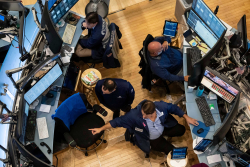
Image via RealClearMarkets
There’s “No Bubble”? Fine. But Valuation Still Collects Its Debt
A new argument making the rounds says there’s no such thing as a stock-market bubble, that “bubble” is mostly a pundit label slapped onto price declines after the fact. The critique has teeth: markets don’t come with a thermometer that reads “Bubble: 102 degrees,” and investors love tidy stories when reality is messy.
But semantics don’t spare portfolios. Whether you call it a bubble, an overshoot, or a liquidity-fueled valuation event, the mechanism is familiar: expectations run ahead of cash flows, narratives substitute for underwriting, and eventually the market demands proof. It’s not mystical, it’s math and human behavior repeating itself in different costumes.
In my world, the useful question isn’t “Is this a bubble?” It’s “What assumptions have to stay true for today’s price to be rational, and what happens if they don’t?” That’s how you survive dot-com, 2008, COVID, and whatever the next curveball is.
🥃 Cole's Take: I don’t care what we call it; I care what it does to your drawdown when sentiment turns. If a position only works when the next buyer pays more, you’re not investing, you’re hoping. Underwrite cash flows, demand margin of safety, and let other people argue vocabulary on television.

Image via Backpacker
Washington Hikers: A $5,000 Grant for a PCT Thru-Hike (And Why That Matters)
A new Pacific Crest Trail grant is offering $5,000 to an aspiring backpacker from Washington State, aiming to help fund a thru-hike. For anyone who’s priced out a long trail these days, that number isn’t pocket change: gear, travel, permits, time off work, and the “stuff breaks” budget add up fast.
What I like about programs like this is they widen the funnel. The PCT isn’t just a physical challenge, it’s a logistics project and a financial decision. A grant doesn’t just buy a sleeping bag; it buys permission, time, and a little breathing room.
And for the rest of us who aren’t eligible, it’s still a good reminder: the best return on money isn’t always a bigger screen or a faster car. Sometimes it’s a few weeks where your calendar doesn’t own you.
🥃 Cole's Take: If you’ve earned the good life, put “time outside” in the same category as “portfolio maintenance.” The trail is a reset button that compounds in ways your brokerage statement won’t show. And if you know someone dreaming about the PCT, send them this grant link instead of another piece of gear they didn’t ask for.
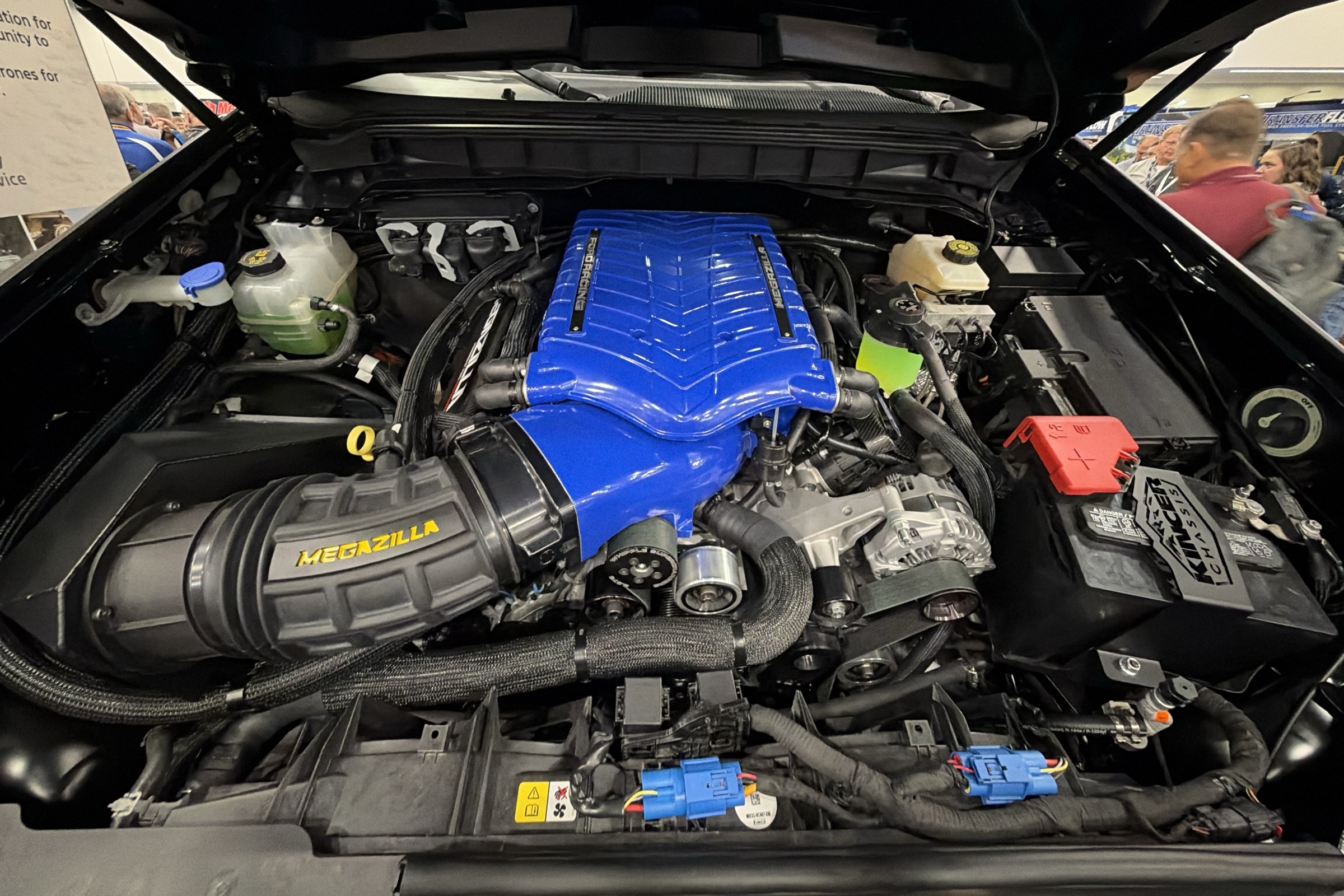
Image via Off Road Xtreme
Megazilla 2.0: 1,200 Horsepower in a Crate, Because America Never Really Quit
The Megazilla 2.0 crate motor is a 7.3-liter pushrod V8 built with forged internals and topped with a big Whipple supercharger, good for more than 1,200 horsepower. It’s the kind of spec sheet that reads like a dare, and it showed up with the confidence you’d expect from the SEMA universe.
This isn’t just an engine story, it’s a signal about consumer appetite at the high end. Even with rates, even with price fatigue, there’s still a deep market for premium performance parts, custom builds, and toys that are unapologetically impractical.
From an investing lens, it also underlines a stubborn truth: when the top slice of the income distribution is doing fine, “passion spending” doesn’t die, it migrates. The brands that serve that demand with quality and supply reliability can stay busy even in choppy macro weather.
🥃 Cole's Take: I’m not buying 1,200 horsepower because I’m mature; I’m buying it because I’ve learned to respect my own fun budget. As an investor, I watch this category as a pulse check on affluent discretionary demand. If the high-end hobby economy cracks, it shows up here before it hits broader retail.
Image via Power & Motoryacht
Fort Lauderdale Boat Show 2026: A Floating Index of Confidence
The 2026 Fort Lauderdale International Boat Show walkthrough is a clean snapshot of where the luxury and marine market sits right now. When boat shows are packed and inventory looks healthy, it’s a tell: high-net-worth confidence is still intact, and big-ticket leisure isn’t getting postponed en masse.
Boats are a special kind of purchase because they bundle aspiration, lifestyle, and ongoing operating costs. People don’t just buy a vessel, they buy marina fees, maintenance schedules, upgrades, and a whole ecosystem of services. That makes the sector a useful read on the broader “services plus experiences” economy.
If you want to understand why certain pockets of consumer spending refuse to slow down, walk a show like this. It’s not a recession gauge for everyone, but it is a window into the behavior of the people who move a disproportionate amount of discretionary dollars.
🥃 Cole's Take: Boat shows are like earnings calls you can walk through: you see who’s confident, who’s stretching, and who’s paying cash. If you’re investing in luxury-adjacent businesses, pay attention to this ecosystem, not just the sticker price on the hull. And personally, if you can’t use it at least a dozen times a year, rent it and keep your capital working.
That’s the brief. Keep your risk tight, your time outside non-negotiable, and your luxuries earned. See you next issue. Cole Hargrove Editor, The Balanced Brief Live Well. Invest Smart. No Apologies.
— Cole Hargrove