Sponsored By:
The midterms are over — but is your portfolio actually protected? Five tickers can share one hidden risk, and a long-term plan won't save you if several holdings depend on the same economic factors. Now is the time to stress-test your mix before the next headline does it for you.
Our free five-stock portfolio-resilience report gives you concrete ideas to compare your holdings, spot concentrated exposures, and question your current positions. Don't wait for a loss to start asking the right questions.
Get the Free ReportBy clicking this link you agree to receive emails from StockEarnings and our affiliates. You can opt out at any time. Privacy Policy.

Live Well. Invest Smart. No Apologies.
Image via Fox Business
Anthropic’s $1.5T IPO Rewrites the Tech Wealth Map (Again)
Anthropic’s blockbuster debut isn’t just another AI headline. At a $1.5 trillion valuation, it’s a full-scale wealth event, the kind that creates new liquidity, new angel checks, and a fresh generation of people who suddenly need to figure out taxes, trusts, and what to do with concentrated stock.
Developers in South Florida are already reading the tea leaves: newly-minted tech millionaires tend to shop for lifestyle first, then optimize for taxes and climate, and Florida keeps staying at the top of that list. We’ve seen versions of this movie after dot-com, after 2020, and after every big liquidity cycle in between: a flood of high earners, a spike in prime real estate, and a lot of “I’ll just rent for a year” that turns into a purchase.
The second-order effect matters more than the headlines. Big IPOs loosen risk appetites across the ecosystem: more startup funding, more secondary sales, more high-end consumption, and more pressure on premium housing from Miami up through Palm Beach. If you own quality property, that bid can last longer than you expect; if you’re trying to buy it, timing and financing discipline matter more than the view.
🥃 Cole's Take: Treat this like a liquidity cycle, not a celebrity story. If you’re sitting on concentrated winners from the AI run, you don’t need a bigger boat; you need a plan: staged sales, tax strategy, and real diversification. And if you’re eyeing South Florida real estate, remember: the best time to buy is when you can negotiate, not when your Uber driver starts talking about “the new wave.”
Image via RealClearMarkets
Markets Are Whispering Something Ugly While the Data Smiles
The headline economic numbers are still giving people cover to stay optimistic: employment holding up, the consumer still spending, and the official narrative that the landing is manageable. But markets don’t wait for confirmation. They price stress early, then hand the economists a report card later.
This piece flags that disconnect: parts of the market are sending signals that don’t match the “everything’s fine” vibe. Think in terms of investors reaching for safety in pockets that typically lead during slowdowns, while other areas struggle to hold gains. That’s usually not random noise; it’s positioning.
When I see a spread between “officially okay” and “market feels off,” I get practical: liquidity, credit, and forward earnings. You don’t need a recession call to play defense. You just need to notice when the risk/reward gets asymmetrical.
🥃 Cole's Take: When markets start flashing yellow, I don’t argue with them—I tighten my process. That means trimming the stuff you own “because it’s been working,” boosting cash-like flexibility, and refusing to chase late-cycle momentum. If the economy stays fine, you’ll still participate; if it turns, you’ll be grateful you didn’t insist on being a hero.
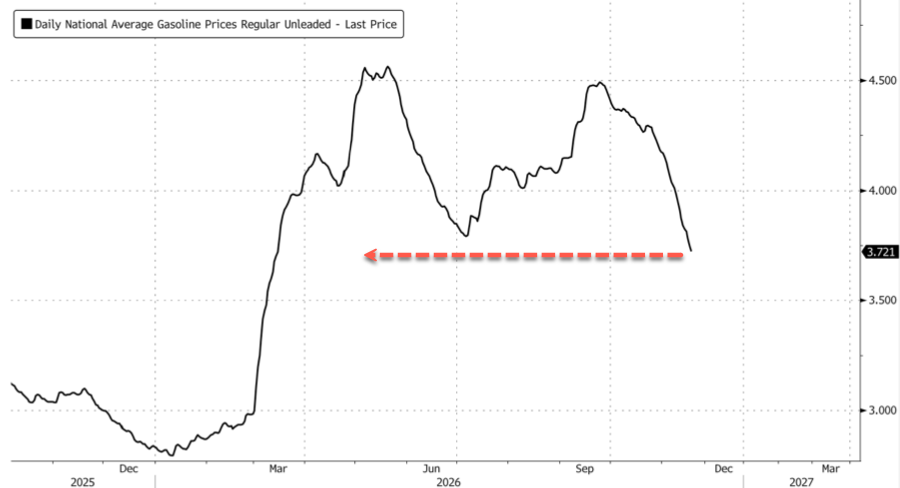
Image via ZeroHedge
Gas Prices Drop Before Thanksgiving, and It’s a Quiet Gift to Consumers
Heading into Thanksgiving travel, pump prices hitting an eight-month low is real-world relief you can feel without a spreadsheet. Lower fuel costs don’t just make the drive to see family cheaper; they free up a little discretionary cash at a time of year when spending pressure is already high.
For markets, softer fuel can cool inflation prints at the margin and ease some consumer stress, especially for households that live car-first lifestyles. The catch is that energy prices can be fickle: geopolitics, refinery capacity, and winter weather can swing things fast, so nobody should build a budget assuming the good news lasts forever.
Still, there’s a behavioral component that matters: when people feel a little less squeezed, they spend a little looser. That can buoy certain pockets of retail, travel, and leisure even if the broader economy is slowing.
🥃 Cole's Take: Enjoy the cheaper fill-up, but don’t confuse it with a lasting trend. I like using temporary relief to do permanent good: top off emergency cash, pay down revolving debt, and keep your travel spending intentional. In portfolios, I’m not chasing energy either way off one headline—I’m watching the inflation and demand implications.
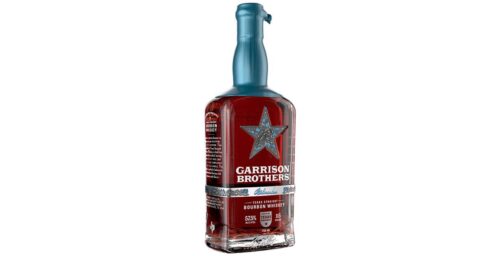
Image via The Whiskey Wash
A $150+ Texas Bourbon That Swings Hard: Balmorhea Under the Microscope
Garrison Brothers Balmorhea has always been a bold pour, and this review leans into what you’re paying for: intensity. The profile described here is unapologetically big—oak, vanilla, and that double-oaked weight that can feel like dessert if that’s your lane.
The price is the whole debate. At $150 and up, you’re not buying “good bourbon.” You’re buying a specific experience, a statement bottle, and a flavor punch that’s meant to stand out in a lineup. The question isn’t whether it’s well-made; it’s whether you want that much extraction and sweetness in one glass.
What I appreciate about bottles like this is they force you to be honest about your palate. Not every expensive whiskey is nuanced; some are just louder. And loud has its place—especially when the weather’s cold and the fire is doing its job.
🥃 Cole's Take: If you love big, oak-forward, vanilla-heavy bourbon, this is a fun splurge and a crowd-pleaser for the right crowd. If you’re chasing elegance and restraint, you might feel like you paid for volume instead of detail. My rule: try it at a bar first, then buy the bottle for moments, not for habit.

Image via Robb Report
An F.P. Journe Just Reset the French Auction Record, and the Luxury Bid Isn’t Dead
An F.P. Journe Tourbillon Souverain “Souscription” selling for $11.03 million at Bonhams Paris is more than a watch-world flex. It’s a signal that at the high end, scarcity and provenance still pull serious capital, even when broader consumer sentiment wobbles.
The most interesting part isn’t the number; it’s what it implies about who’s buying. Ultra-wealthy collectors tend to keep moving when everyone else pauses, and trophy assets become a kind of cultural currency. When that segment is confident, you’ll see it first in auctions, not in mall traffic.
None of this makes luxury collectibles “safe,” but it does reinforce the idea that the market bifurcates in uncertain times: average goods get price-sensitive, while exceptional objects with real scarcity can detach from the crowd.
🥃 Cole's Take: I love watches, but I don’t kid myself: this is passion spending with a side of asset behavior. If you’re playing in this arena, buy the rare piece you’d happily keep through a bad decade, not the one you hope you can flip. And if you’re not already a real collector, don’t let a record price talk you into learning an expensive lesson.

Image via Car and Driver
A Retro Chinese PHEV Brand Wants In: FullGood’s U.S. Test Balloon
FullGood is pitching classic-car-inspired plug-in hybrids for the U.S., starting with a very on-the-nose play: a seven-seat van called the Summer that nods to the VW Microbus. They brought it to Los Angeles looking for an American partner, which tells you they understand the hard part isn’t designing a nostalgia shape—it’s distribution, compliance, service, and trust.
PHEVs are a pragmatic angle for the U.S. market, especially for buyers who want electric around town without committing to charging logistics for longer trips. But any Chinese automaker walking into the U.S. right now is stepping into a thicket of politics, tariffs, data-security scrutiny, and consumer skepticism. You can have a great product and still lose the market.
If they do land a partner, the real test will be execution: reliability, parts availability, warranty handling, and whether the pricing makes sense against established brands. Americans will forgive a lot for a cool design—right up until they need a replacement sensor and the car sits for three weeks.
🥃 Cole's Take: I like the concept: PHEV plus retro utility is a smart product thesis for families and road trips. But I wouldn’t bet on the U.S. rollout until I see the partner, the service plan, and a clear answer on regulatory headwinds. Good design gets you attention; durable infrastructure gets you repeat buyers.
I’m heading into the weekend with an eye on the risk signals, a light touch on new buys, and a heavy hand on the brisket. If you’re traveling, enjoy the cheaper gas and keep your portfolio boring enough to let your life stay interesting. Cole Hargrove
— Cole Hargrove