A little-known force is now controlling the S&P's price action — and most traders have no idea it exists. A former VP of a trillion-dollar firm has spent years cracking it, and the results speak for themselves: a 79.4% win rate with same-day returns like 176% and 75.4% — up or down market, it doesn't matter.
This isn't mainstream. It won't be on CNBC. But right now, you can get the full breakdown — including how to use this force to target double- and triple-digit moves today. Don't sit this one out.
Get the Free Breakdown NowWe develop tools and strategies to the best of our ability, but we can't guarantee the future. In LIVE trading alerts in real time from 08/23/24 to 3/28/26, the strategy is 54-14, with an overall win rate of 79.4% and an average return (winners and losers included) of 59.3%, with an average winner of 86.8% over a 1-day hold time. Trade at your own risk. By clicking the link above you agree to periodic updates from The TradingPub and its partners. Privacy Policy.

Live Well. Invest Smart. No Apologies.

Image via Yahoo Finance
Nasdaq Takes It on the Chin as Chips Slide and Netflix Misses the Mood
Today was a reminder that the market doesn’t punish “bad companies” as much as it punishes crowded narratives. Semiconductors got hit hard, dragging the Nasdaq lower, and the broader market didn’t have the footing to resist. When chips wobble, the whole AI complex feels it in its knees.
On the consumer side, Netflix didn’t deliver the kind of clean, confidence-building result that keeps a stretched tape floating. The reaction wasn’t just about one earnings report; it was about expectations. Investors have been paying for perfection in pockets of tech and communication, and days like this are how the bill gets collected.
If you’re looking for a silver lining, it’s that sell-offs like this usually separate “AI as a theme” from “AI as a price.” The theme is intact. The price, on the other hand, can absolutely come down to meet reality—especially when positioning gets one-sided.
🥃 Cole's Take: When chips lead the market down, I don’t panic—I check whether the underlying demand story changed. Most of the time, it didn’t; the multiple did. If you’ve got dry powder, you want a shopping list, not a speech about “long-term conviction.”
US Factories Keep Rebuilding, Even with War Risk and Tariff Noise in the Background
The industrial economy is still showing signs of a broader recovery, and that matters because it’s the kind of growth that tends to stick. The point isn’t that manufacturing is suddenly booming everywhere—it’s that the expansion is spreading beyond the narrow band of AI suppliers and into more normal, real-economy activity.
That’s happening while the macro headlines are anything but calm. Geopolitical risk tied to Iran is a live wire for energy and shipping, and tariff talk is back in a way that can jam supply chains and pricing plans. Yet factories are still chugging along, which tells you there’s actual demand and investment underneath the noise.
If this continues, it changes portfolio math. A broader industrial upturn supports earnings outside the megacap tech names, and it gives the market a second engine—one that’s less dependent on GPU shipment schedules and quarterly hype cycles.
🥃 Cole's Take: I like this setup: boring strength with scary headlines. If industrial breadth keeps improving, you don’t need to swing at every AI flyer to get paid—you can own quality operators with pricing power and backlog. Just respect that tariffs and geopolitics can turn “steady” into “stalled” fast, so keep position sizes honest.
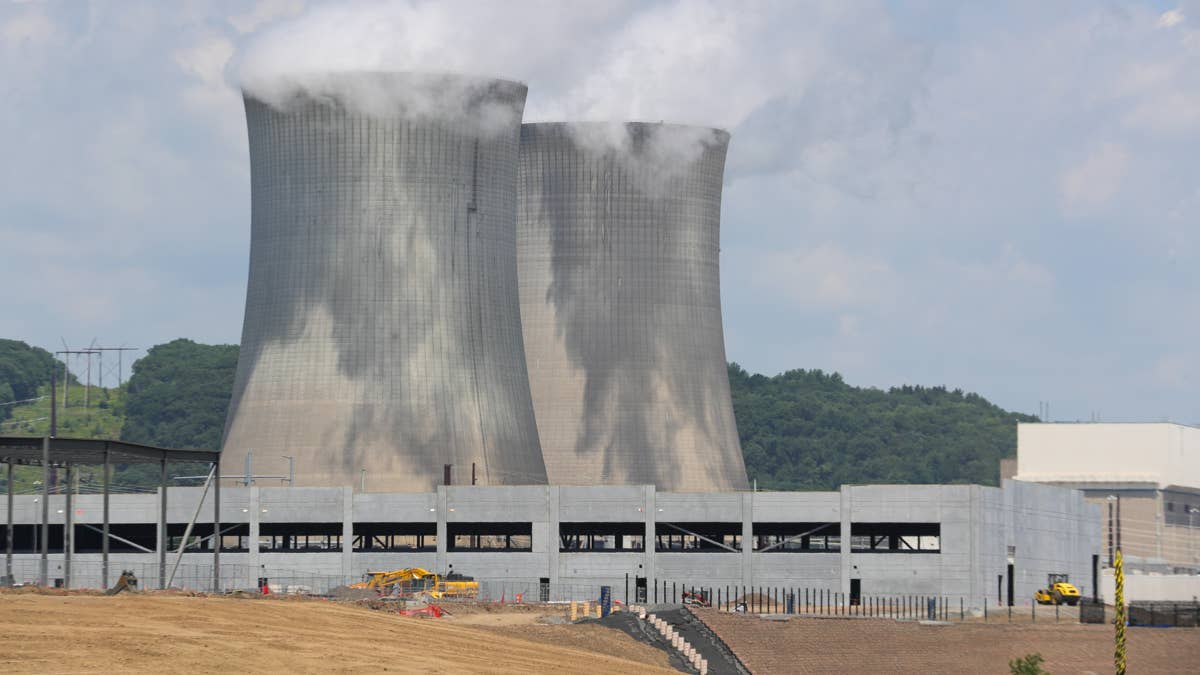
Image via TheStreet
The Quiet Kingmaker of AI Isn’t a Chip—It’s a Megawatt
AI’s growth story is now colliding with a basic physical constraint: electricity. TheStreet points to a major energy player making a big move—another signal that data center power demand is becoming one of the most important investment battlegrounds of the next decade.
The market is starting to treat power providers, grid operators, and generation assets like strategic infrastructure rather than sleepy utilities. That’s a real shift. When hyperscalers and data center developers are bidding for capacity, reliability becomes a product, and “where is the power?” becomes as critical as “where is the talent?”
For investors, this is the second-order trade that people usually figure out late. The first-order trade was chips. The second-order trade is power generation, transmission, permitting, and the companies that can actually deliver electrons at scale without drowning in regulatory delays.
🥃 Cole's Take: If you want a durable AI angle, follow the bottleneck. Compute is impressive, but compute without power is a press release. I’m more interested in businesses that own scarce capacity, strong interconnect positions, and the political skill to get projects approved—because that’s where pricing power hides.

Image via Robb Report
Tennessee’s One Frank Lloyd Wright Home Hits the Market—and It’s the Right Kind of Rare
The only Frank Lloyd Wright residence in Tennessee is listed for $1.6 million, perched on Missionary Hill in Chattanooga. It’s a 1949 landmarked home known as Shavin House, and it’s the kind of property that doesn’t just “comp” against the neighbor’s renovation—it trades on provenance.
Unique real estate works differently than ordinary housing. You’re not buying square footage; you’re buying scarcity, story, and a certain kind of taste. If you’ve spent time around Nashville and the surrounding areas, you already know the region has matured into a place where high-end buyers show up with real conviction—and they pay for things that feel singular.
That said, landmark status cuts both ways. The right buyer sees stewardship and legacy. The wrong buyer sees restrictions, paperwork, and a list of “no” longer than a winter night.
🥃 Cole's Take: If you’re looking for a primary residence with flexibility, this isn’t that. But if you’re the kind of guy who’d rather own one thing no one else can replicate, this is a serious conversation. Just budget for maintenance like it’s a classic car: you don’t own it to be cheap—you own it to be right.

Image via Car and Driver
Range Rover Sport Goes Electric, and the Luxury EV Fight Gets More Interesting
Range Rover is bringing an all-electric powertrain to the Range Rover Sport lineup, and the early signal is the usual formula: dual motors, all-wheel drive, and the kind of horsepower that makes an on-ramp feel like a private runway. Details are still thin, but the direction is clear—Land Rover wants an EV that doesn’t feel like a compromise.
This matters because luxury buyers aren’t shopping for kilowatts; they’re shopping for confidence. They want effortless speed, quiet comfort, and the ability to handle bad roads without drama. If Range Rover can deliver real-world range, consistent fast charging behavior, and a cabin that still feels like a proper club chair, they’ll have a serious contender.
The big question is execution. The EV space is littered with beautiful prototypes and software headaches. A Range Rover Sport EV has to nail reliability and user experience, because the buyer profile here has zero patience for “beta.”
🥃 Cole's Take: The winning luxury EVs won’t be the ones with the loudest specs—they’ll be the ones that feel finished. If Range Rover gets the charging curve, software stability, and ride quality right, they’ll print money with high-margin trims. If they don’t, buyers will quietly walk back to the brands that already solved the basics.

Image via GOLF.com
Padraig Harrington’s 80, Then a 69, and a Masterclass in Staying Sane
Padraig Harrington opened the Open with an 80, then followed it with a 69—and the bigger surprise wasn’t the bounce-back score. It was his perspective. He wasn’t embarrassed by the 80, and he wasn’t especially impressed by the 69, which is the kind of mental framing most amateurs never learn.
What he’s showing is professional accounting: one round doesn’t define you, and one good day doesn’t crown you. He’s evaluating processes, swings, decisions, and conditions, not just the number on the card. That’s how you keep your head when the weather turns or the putter goes cold.
It’s also a clean parallel to investing. Anybody can look brilliant during a tailwind. The real edge is staying rational when the scorecard looks ugly and you’re tempted to chase hero shots.
🥃 Cole's Take: That’s the mindset I respect: no melodrama on the bad days, no chest-thumping on the good ones. Whether it’s a round of golf or a rough week in the market, you don’t fix it with emotion—you fix it with the next correct decision. Keep your routine, keep your discipline, and let the averages do their job.
📎 GOLF.com
That’s the week. Pour something decent, check your risk exposure, and remember: the good life is the point—protect it like it matters.
— Cole Hargrove