History shows a clear pattern: the investors who recognized the exact inflection point in the dot-com boom pocketed 400–800% gains in 18 months. Those who spotted the same moment in cloud computing saw 300–600% returns. Based on 50 years of market data, that same moment is happening right now — and the acceleration phase has already begun.
This free 7-page report reveals where we are in the current megatrend cycle, why the next 18 months are critical, and how to position yourself before the window closes. Don't be the investor who enters too late.
Get the Free ReportBy clicking 'Get the Free Report' you are automatically subscribing to Darwin Investor Network and will receive a free subscription to the Chaikin PowerFeed newsletter. Unsubscribing is easy. Privacy Policy

Live Well. Invest Smart. No Apologies.

Image via Yahoo Finance
Chinalco Goes Shopping Again: 95% Of Opuwo Is A Statement, Not A Side Bet
Chinalco Mining’s move to acquire a 95% stake in the Opuwo Project is the kind of quiet headline that matters more than most splashy tech chatter. Big Chinese buyers don’t chase minority positions when they’re casually curious—they do it when they want control, security of supply, and optionality for the next decade.
Call it what it is: a continued push to lock down upstream resources while the West argues about permitting timelines and ESG definitions. Whether Opuwo ultimately feeds the battery chain, broader industrial metals demand, or both, the pattern is consistent—China prefers ownership over access.
If you’re managing real wealth, this is another reminder that the commodity cycle isn’t just about price. It’s about who owns the faucet when everyone else needs a drink.
🥃 Cole's Take: When a player like Chinalco buys 95%, they’re not making a trade—they’re building leverage. I don’t chase every mining headline, but I do treat these as signals to stay diversified in real assets: quality miners, selective royalty names, and a measured allocation to hard stores of value. Supply chains aren’t getting less political from here.
Oil’s Rough Month: Doha Headlines, Mixed Messages, And A Market That Smells A Deal
Oil is tracking for a steep monthly drop as traders weigh the possibility of U.S.-Iran talks in Doha—and the usual whiplash of competing statements. One headline hints at progress, the next one hints at hard lines, and the market does what it always does in that situation: it reprices risk fast and asks questions later.
Here’s the practical driver: even the prospect of more barrels down the line changes positioning. Add in macro nerves, a still-fragile demand narrative, and funds that don’t want to hold crowded energy trades into event risk, and you get a month like this.
The bigger point is that oil is trading geopolitics again, not just inventories. And when geopolitics is the swing factor, your time horizon matters a lot more than your hot take.
🥃 Cole's Take: I don’t marry oil directionally—I date it, and I keep my exits planned. If crude keeps sliding, I’m looking for disciplined balance sheets and buyback-driven energy names rather than trying to nail the exact bottom in futures. Cheap oil is great for the consumer, but it can also be the market whispering about growth slowing—so keep an eye on your cyclicals.
📎 CNBC
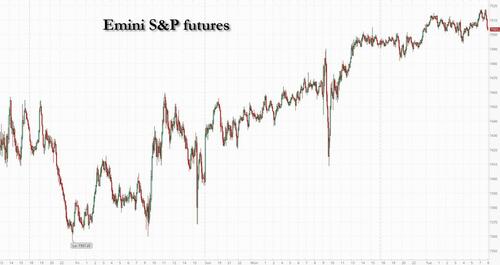
Image via ZeroHedge
S&P Just Logged Its Best Quarter In Six Years—Don’t Confuse Relief With Safety
U.S. stock futures were flat as the market tried to close the books on the S&P’s best quarter in six years. That’s a big number, and it tells you something simple: positioning and sentiment can turn faster than fundamentals, especially when investors decide the worst-case scenario didn’t show up.
But the same tape that rallies on “relief” can wobble on a single geopolitical headline. We saw that again with futures giving back earlier gains on Iran-related noise. That’s not a bug in the system—it’s the system: liquidity, leverage, and headline sensitivity when valuations are already doing some heavy lifting.
The healthiest thing you can do after a monster quarter is treat it like a gift, not a guarantee. Rebalance. Tighten up the junk. Make sure the portfolio you’re holding still matches the life you’re living.
🥃 Cole's Take: After a quarter like this, my default move is to take a little risk off the table and pay myself. Not because I’m bearish, but because I’ve lived through what happens when everyone believes the easy part will last. Let your winners run, sure—but trim the stuff you only own because it was going up.

Image via GearJunkie
Georgia Might Get A New National Park—And That’s A Better Investment Than Another Gadget
Efforts are underway to designate Ocmulgee Mounds as a national park, which would put Georgia on a short list of places where history, public land, and weekend escape all intersect. If you’ve never spent real time around the Ocmulgee area, it’s the kind of landscape that quietly resets your nervous system—and that matters more at 54 than any productivity hack.
A new national park designation can also reshape a region: more visitors, more infrastructure, more attention, and typically more pressure on nearby lodging and recreation businesses. Done right, it elevates conservation while giving locals a durable economic tailwind.
For the guys reading this who split time between markets and the outdoors: this is one of those stories where your calendar and your capital can both benefit. Sometimes the best “alpha” is just being early to a place before everyone else discovers it.
🥃 Cole's Take: I love this. Parks are one of the few things we can expand that actually improve quality of life without needing a quarterly earnings call to justify it. If the designation moves forward, I’m scouting a long weekend in the area—and if you own property within striking distance, think like a local business owner: access, demand, and stewardship all rise together.
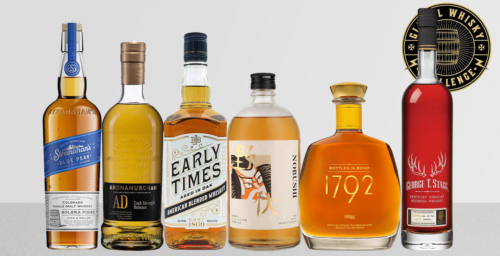
Image via The Whiskey Wash
Global Whisky Challenge Winners: 13 Double Golds, And A Reminder That Taste Has A Price Floor
The Global Whisky Challenge 2026 ran 140 entries from seven countries through the wringer, and only 13 bottles hit the 95+ point mark for Double Gold. That kind of distribution tells you what any investor already understands: true outperformance is rare, and the middle is crowded.
Awards don’t magically make a whisky better, but they do move attention—and attention moves bottles. The brands that land on these lists tend to see a bump in demand, especially among buyers who want a sure thing for the bar cart, the golf trip, or the gift shelf.
If you care about value, the trick is separating “good liquid” from “good story.” A medal is a signal, not a guarantee. But it’s a useful signal when you’re trying to buy one great bottle instead of five average ones.
🥃 Cole's Take: I treat award lists the same way I treat analyst upgrades: a prompt to look closer, not a reason to buy blind. If you’re building a tight home bar, use the Double Gold list as your shortlist, then buy what you’ll actually open. The only whisky that compounds is the one you enjoy—not the one you hoard for imaginary resale.

Image via Robb Report
World Cup VIP: Open Bars, Private Entrances, And The Real Cost Of Buying Time
Robb Report lays out what it’s like to attend the World Cup as a VIP, and it’s exactly what premium access should be: made-to-order food, open bars, exclusive merch stations, and the kind of logistics that keep you out of lines and out of hassle. You’re not paying for a seat—you’re paying for frictionless experience.
In a world where everyone is “busy,” the scarce commodity isn’t cash. It’s time, energy, and the ability to actually enjoy the event you traveled for. VIP is the travel equivalent of buying a high-quality mattress: it feels indulgent until you realize it’s just rational.
The catch is the same as always: the best upgrades are the ones that improve the memory, not the Instagram. If VIP means you’re present, comfortable, and able to make a night of it with the people you care about, it’s money well spent.
🥃 Cole's Take: If you can afford VIP without tapping the portfolio or carrying a balance, I’m in favor—especially for a bucket-list event like the World Cup. But don’t overpay for “luxury” that doesn’t change the experience; the goal is less waiting, better sightlines, and zero stress. Spend on the parts that buy time back.
That’s the brief. Protect your downside, own some real assets, and plan a weekend somewhere that reminds you the whole point was to live well. —Cole Hargrove, The Balanced Brief
— Cole Hargrove