Sponsored By:
Trump's Department of Labor just proposed allowing physical gold inside 401(k)s — and if approved, millions of Americans could gain access by 2027. BlackRock is already launching new gold funds. JP Morgan forecasts gold hitting $6,000/oz. And gold has already surged 64% in 2025 — before this policy even officially dropped.
If you're over 59½, there's a legal, IRS-approved strategy to move part of your 401(k) or IRA into physical gold right now — tax-deferred and penalty-free. A free guide called "Retirement to Gold" breaks down exactly how to do it before everyone else catches on.
Get the Free Guide NowThis is an advertisement. If you no longer wish to receive promotional messages from Secco Squared, please unsubscribe here. Or write to: 351 Paseo Nuevo, Floor 2, Santa Barbara, CA, US 93101.

Live Well. Invest Smart. No Apologies.

Image via Fox Business
Bombardier’s U.S. Bet: Manufacturing Clout Meets Political Theater
Bombardier is expanding its U.S. footprint under a $270 million investment package that President Trump is publicly celebrating. On paper, it’s straightforward: more facilities, more jobs, more proximity to the world’s deepest business-aviation customer base. In practice, it’s also a signal to corporate buyers and regulators that Bombardier wants to be seen as an American-adjacent industrial asset, not just a Canadian nameplate.
Business aviation has been one of the steadier pockets of aerospace through the last few years, even as commercial cycles whipsaw. High-net-worth travel and corporate fleet refreshes don’t move like leisure airline demand; they move like tax regimes, balance sheets, and executive time. A U.S.-leaning investment strategy helps Bombardier on all three, especially if procurement and certification bottlenecks keep favoring firms that can build and service close to the customer.
There’s also a financing angle hiding in plain sight. A bigger U.S. presence can translate into friendlier local incentives, easier vendor logistics, and a narrative Wall Street can underwrite: predictable aftermarket revenue, tighter delivery timelines, and political insulation in a world that’s getting more protectionist by the quarter.
🥃 Cole's Take: If you sell premium hardware, you go where the customer writes checks and where the politics can’t easily kneecap you. This isn’t about headlines; it’s about supply chains, service networks, and making your backlog more durable. If you own the stock, I’d watch margins and delivery cadence, not the ribbon-cutting.
American Express Cuts 5%: AI Isn’t a Tool Anymore, It’s the Org Chart
American Express is cutting roughly 5% of its workforce as it “prepares for AI,” alongside a $336 million restructuring charge disclosed with third-quarter results. For a brand built on premium service, expense discipline is always a tricky message: you can’t tout white-glove while quietly thinning out the glove drawer. But Amex isn’t making this move because it wants to; it’s doing it because competitors and customers now expect faster approvals, smarter fraud detection, and more personalization at lower cost.
The larger story is the next phase of automation: not just chatbots on the front end, but AI threaded through underwriting, risk modeling, dispute resolution, compliance monitoring, and internal operations. Every one of those functions used to justify headcount growth. Now the default assumption is the opposite: if your workflow can be learned, it can be compressed.
For investors, restructuring charges are the immediate headline, but the real question is whether Amex can hold the line on customer experience while taking cost out. Premium brands don’t get forgiveness for “sorry, our AI did it.” They get churn.
🥃 Cole's Take: Layoffs framed as “AI readiness” are code for “we found the margin.” Amex can pull this off if it keeps service quality intact for high-spend cardmembers and uses AI to reduce fraud and losses, not just payroll. If the next few quarters show higher complaints or retention wobble, the market will stop rewarding the story fast.
📎 CNBC
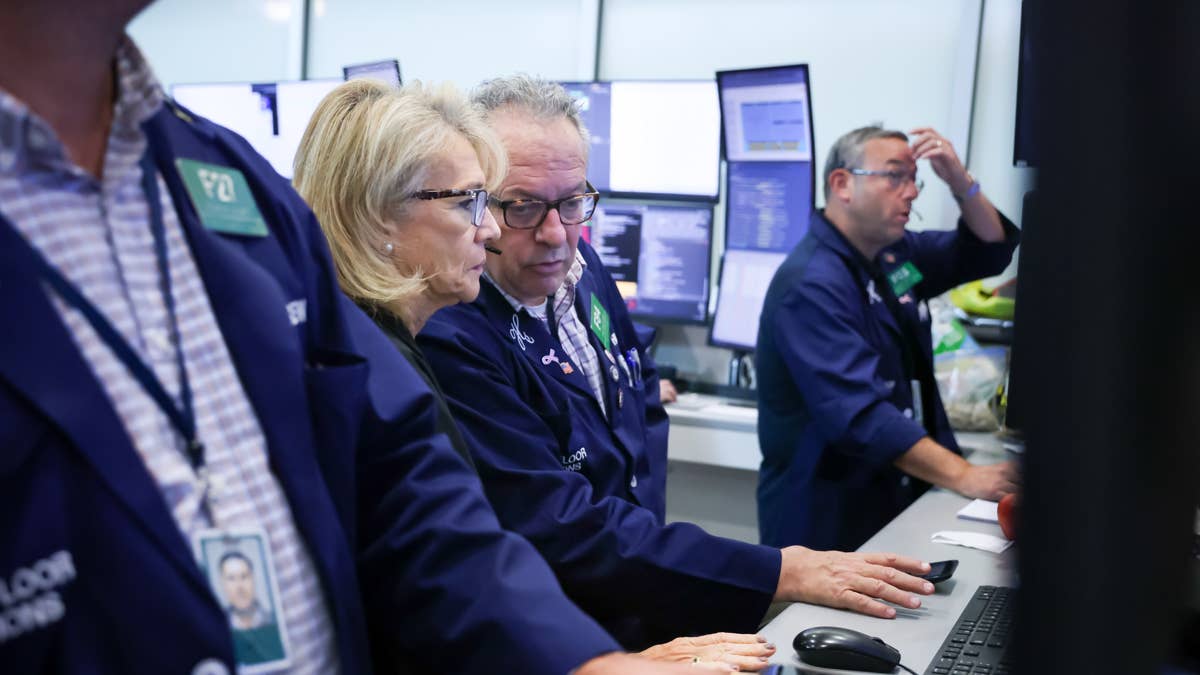
Image via TheStreet
Apple vs. Alphabet: Two Giants, Two Very Different Messages to Wall Street
Apple and Alphabet are sending investors different signals, and it’s bigger than a quarter’s worth of headlines. Apple’s story tends to revolve around discipline: ecosystem lock-in, hardware-plus-services monetization, and a careful approach to new categories. Alphabet’s story, especially in the AI era, reads more like controlled volatility: huge optionality, massive infrastructure spending, and the constant risk that a new interface reshapes how people search and how advertisers pay.
What investors often miss is that both companies are fighting the same war from opposite trenches. Apple wants to keep the consumer relationship at the device and OS level, where distribution is power and defaults are destiny. Alphabet wants to keep the discovery layer, where intent turns into cash. AI isn’t just a product cycle for either one; it’s a battle over who owns the front door to information and commerce.
The market’s job is to price certainty versus upside. Apple prices like a fortress that pays rent. Alphabet prices like a lab that can print money but has to keep reinventing the printing press. The “bigger story” is whether AI shifts value toward the platform owner (Apple) or the answer engine and ad rail (Alphabet).
🥃 Cole's Take: I don’t treat these as the same kind of “big tech” anymore. Apple is what you own when you want durable cashflows and controlled innovation; Alphabet is what you own when you believe the next interface still monetizes at scale. If you’re building a portfolio you can sleep on, size Apple like a core holding and Alphabet like a higher-beta bet on AI-driven behavior change.

Image via Car and Driver
2027 BMW iX5: The Electric X5 for People Who Actually Drive
The 2027 BMW iX5 aims at a sweet spot a lot of EVs still miss: familiar premium SUV proportions with the promise of serious performance and real-world usability. Car and Driver’s overview highlights the essentials buyers care about in this class: expected pricing, powertrain details, and where it slots against other luxury electric SUVs fighting for the same driveway. If BMW gets the basics right, the iX5 could become the default choice for shoppers who want electric without the “look at me” design tax.
BMW’s broader challenge is that the luxury EV segment is no longer just about acceleration and screens. It’s about charging experience, software stability, cold-weather range, resale value, and how gracefully the vehicle fits into a family’s routine. That’s where legacy brands can win, because they understand ride quality, ergonomics, dealer service, and the little engineering decisions that matter on mile 200, not mile 2.
From a lifestyle angle, the iX5 is the kind of vehicle that should be able to do golf clubs on Friday, a cabin run on Saturday, and the airport on Monday without feeling like a science project. The question is whether BMW’s software and battery strategy delivers the kind of predictability buyers used to associate with its inline-six engines.
🥃 Cole's Take: If BMW nails range consistency and charging reliability, the iX5 will sell itself to the “I don’t want a gadget, I want a vehicle” crowd. I’m watching depreciation curves and battery warranty terms as closely as horsepower. Luxury EVs are fun, but the smart money buys the one that won’t punish you at trade-in.

Image via GOLF.com
Tiger Woods Return Chatter: The Schedule Tells You More Than the Soundbite
A TV analyst says Tiger Woods “wants to play,” with NBC’s Kevin Kisner suggesting Tiger plans to play a full TGL schedule next year and predicting a return to pro golf soon. The headline is emotional because Tiger is the rare athlete who moves markets inside the sport: ratings, sponsor attention, ticket demand, and the overall gravity of a tournament week.
But the important detail is the type of schedule being discussed. TGL is structured, controlled, and designed to reduce the wear-and-tear variables that have chewed up Tiger’s body over the last few years. If he can ramp competitive reps in that environment, it’s a logical on-ramp to limited PGA starts where the course, travel, and recovery plan are chosen with surgical precision.
Golf fans want a comeback story. Golf businesses want predictability: appearances you can sell, broadcast windows you can promote, and content that draws casual viewers back in. Tiger’s camp has always played the long game; if the plan is being talked about publicly, it’s likely because the framework is real.
🥃 Cole's Take: I’ll believe the return when I see him stack consecutive competitive weeks without a setback, not when I hear optimism on TV. The smart play for Tiger is selective starts and a schedule built around recovery, not nostalgia. If he can show up healthy, even a part-time Tiger moves the entire golf economy.
📎 GOLF.com

Image via Surfer
Typhoon Champi and the Taiwan Coast: When Nature Reminds You Who’s in Charge
Super Typhoon Champi generated 20-foot monster waves along Taiwan’s coastline, with video capturing the kind of surf that looks cinematic until you remember what it does to harbors, roads, and coastal homes. Even as the storm weakens, the dangerous surf, destructive winds, and torrential rain remain a serious threat. This is the part that gets lost in the highlight reel: the damage often comes after the “peak,” when people assume the risk is past.
For anyone who travels, surfs, boats, or even just loves coastal towns, these storms are a brutal reminder that climate risk isn’t theoretical. It’s insurance premiums, rebuilding timelines, supply chain delays, and real human displacement. Taiwan matters beyond tourism, too; weather disruption there can ripple through shipping lanes and industrial output, and markets have become hypersensitive to anything that threatens the world’s tighter-than-admitted supply networks.
If you’ve ever watched a shoreline take a beating in real time, you don’t forget it. One day the beach looks like a postcard. The next day it looks like a demolition site. Respect the ocean, and respect the forecast.
🥃 Cole's Take: This is why I treat “coastal paradise” real estate and travel plans with the same seriousness as an earnings report. The ocean doesn’t negotiate, and storms don’t care what your calendar says. If you’re invested in anything Asia supply-chain related, don’t ignore weather risk just because it isn’t a central-bank headline.
📎 Surfer
That’s the week. Keep your cash earning, your risk intentional, and your weekends protected. I’ll be watching the tape, and if the weather holds, I’ll be smoking something low and slow outside Nashville. Cole Hargrove Editor, The Balanced Brief Live Well. Invest Smart. No Apologies.
— Cole Hargrove