Sponsored By:
Every major market move leaves clues — the edge belongs to whoever spots them first. AI is now giving investors a powerful new way to analyze massive amounts of market data, detect unusual patterns, and anticipate what may be developing beneath the surface before the crowd catches on.
Investor News has put together a new report breaking down exactly how this emerging approach works — and what it could mean for investors hungry for a real edge. The most important question isn't what the market did yesterday. It's what the data is pointing to next.
Get the Free ReportBy following the link above, you're choosing to opt in to receive insightful updates from Investor News + 2 free bonus subscriptions. Your privacy is important to us. You can unsubscribe anytime. See our privacy policy for details.

Live Well. Invest Smart. No Apologies.

Image via MarketWatch
Bank of America: When the Fine Becomes the Story
Bank of America gave investors the one-two punch: a downbeat earnings read and a $1.2 billion government fine that stole whatever oxygen the quarter had left. The stock reaction wasn’t just about the number; it was about confidence, optics, and the nagging sense that "one-time" charges have a habit of showing up more than once.
In a market that’s gotten less forgiving, big banks don’t get the luxury of shrugging off headline risk. When you’re already fighting tighter spreads, higher funding costs, and customers who rate-shop with a tap, the last thing you need is regulators reminding everyone that controls and culture still matter.
The bigger issue is what this signals for the sector: enforcement is not taking a vacation, and investors are going to discount banks that can’t keep their house in order. Capital returns and efficiency only go so far when trust becomes a variable in the model.
🥃 Cole's Take: If you own the name, treat this like a management quality tax, not a weather event. I don’t mind buying banks when they’re hated, but I want clean operators when the economy is late-cycle and regulators are feeling strong. One ugly fine won’t sink a franchise, but repeated “surprises” will keep the multiple stuck to the floor.

Image via TheStreet
Cathie Wood Loads Up on Meta: Momentum Wearing a Lab Coat
Cathie Wood put fresh money to work in Meta, adding about $17.3 million of the stock. Whatever you think of her style, the move is a clear vote that the mega-cap AI trade still has runway, and that Meta’s ad engine plus its AI tooling is a combination the market won’t ignore.
Meta has matured into a cash machine with a very modern edge: it can fund AI spend internally, defend its ad turf, and still buy back stock. That’s the kind of profile that keeps working when rates are high and investors demand real earnings, not just a story.
Wood’s buys also tell you something about the current tape: the market keeps rewarding scale, data, and distribution. The bar for smaller “AI plays” is higher, because the giants can ship product faster and monetize it immediately.
🥃 Cole's Take: I’m not chasing Meta just because Cathie did, but I understand the logic: in a jittery market, the safest way to own AI upside is often through companies with proven cash flow and pricing power. The risk is regulatory and sentiment whiplash, not the balance sheet. If you’re already overweight mega-cap tech, don’t confuse a good company with a good entry point.

Image via RealClearMarkets
Real Estate in a Higher-Rate World: The Deal Just Changed
Rising interest rates usually mean pressure on property prices and real estate stocks, and the recent drawdowns across REITs and rate-sensitive real estate names reflect that math. But the case being made now is that higher rates don’t kill real estate investing; they simply force discipline back into the process.
In plain English: cap rates, financing terms, and rent growth assumptions have to be real again. When money isn’t free, you win with good basis, durable demand, and structures that can handle a few punches. That means focusing on markets with population inflows, limited new supply, and properties you can improve operationally, not just pray for multiple expansion.
There’s also a behavioral angle: higher rates shake out the “tourists” and bring back negotiated deals. If you can underwrite conservatively and keep liquidity, you start seeing opportunities that didn’t exist when everyone was bidding like it was 2021 forever.
🥃 Cole's Take: Real estate still builds wealth, but you can’t do it on autopilot anymore. I like deals where the downside is survivable without a refi fairy showing up in 18 months, and where cash flow matters on day one. If the numbers don’t work at today’s rates, the price is wrong—wait, negotiate, or walk.

Image via Backpacker
Five New Thru-Hikes to Put on the Calendar Before Life Gets Busy Again
Backpacker rounded up five newer long-distance routes spanning Alaska, India, Japan, and beyond—exactly the kind of list that makes you remember why you stack chips in the first place. These aren’t just weekend strolls; they’re commitment trails that require planning, timing, and the willingness to be uncomfortable for the right reasons.
What I like about this kind of trip is the built-in reset: you trade screens for weather, inboxes for elevation, and meetings for miles. The “new route” angle also matters—less worn-in logistics, fewer crowds, and more of that raw, early-stage feel where you’re solving problems as you go.
The practical takeaway is budget and preparation. International permits, local guides in certain regions, gear decisions, and travel windows can swing the cost and the experience dramatically, so treating it like a serious project pays off.
🥃 Cole's Take: If you’re the kind of man who can price a bond but hasn’t scheduled a real break in two years, pick one trail and lock it in. You don’t need to “earn” the trip—you already did. And for the record, the best return on a long hike is coming home with a quieter head and a sharper appetite for what actually matters.
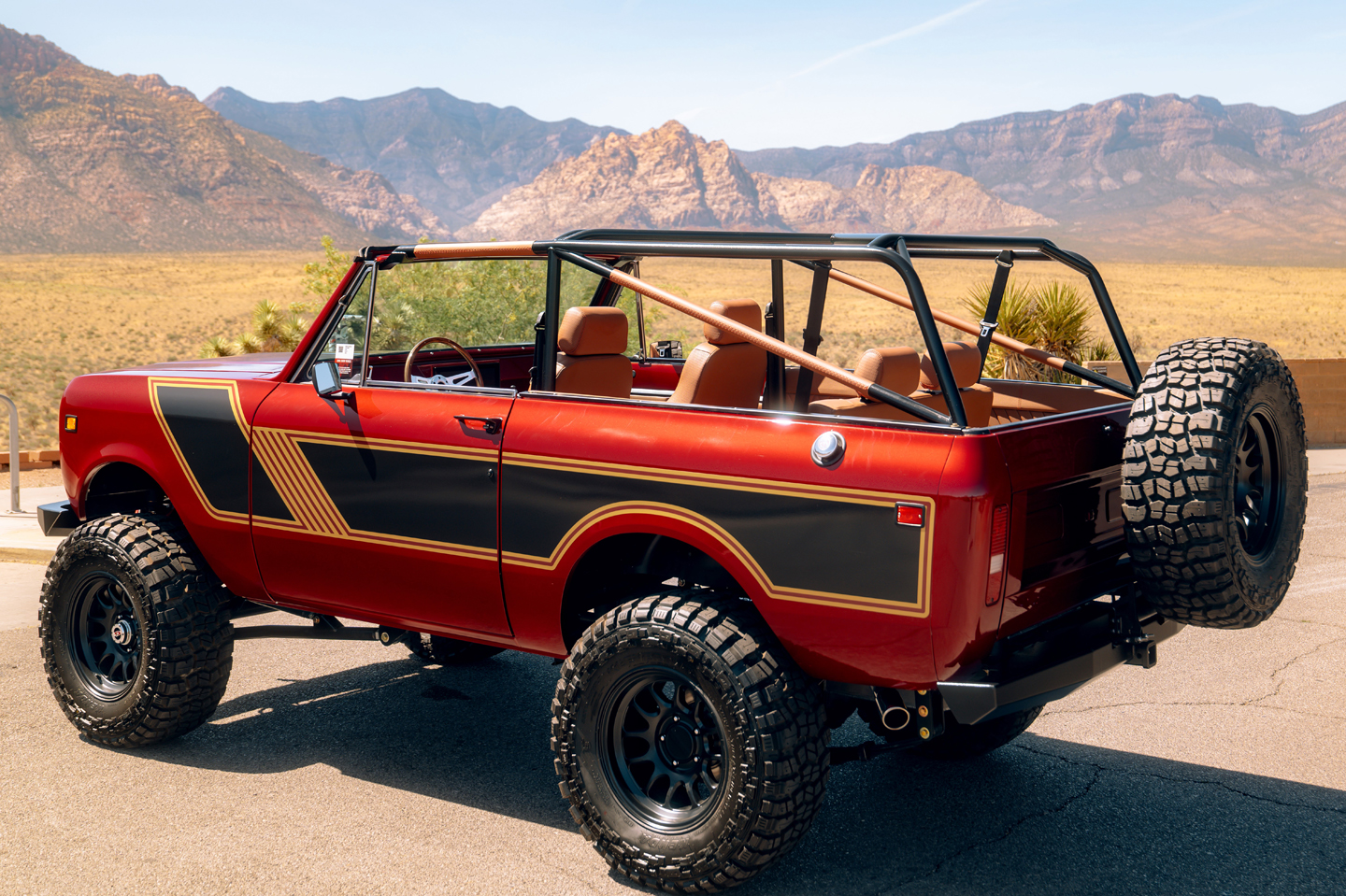
Image via Off Road Xtreme
The 485-HP Scout II: Proof That Nostalgia Should Come With Horsepower
A 1976 International Scout II got the full “next level” treatment: a 485-horsepower LS3 V8, Atlas transfer case, coilover front suspension, and a modernized interior that doesn’t punish you for wanting to drive it more than once a month. It’s the kind of build that keeps the soul of the original while dragging the performance into the present.
There’s a reason these restomods have real staying power: they’re usable. Old rigs have charisma, but modern traffic, modern heat, and modern expectations demand better cooling, better brakes, better drivability, and better reliability. Done right, you get the look and the story without the constant wrench time.
From an asset perspective, high-quality builds have become their own lane in the enthusiast market. The gap between “clean original” and “thoughtfully upgraded” keeps widening, and the best examples trade like art you can actually take into the woods.
🥃 Cole's Take: I love this category because it’s honest fun that can still hold value if you don’t do something stupid with the spec sheet. But don’t confuse a loud build with a smart buy—documentation, parts quality, and who did the work matter more than the horsepower headline. If you want one, buy the best executed example you can find, not the cheapest you can justify.
Boat Test: 2026 Bayliner V22 Hits the Sweet Spot for Real-World Lake Days
Bayliner’s 2026 V22 earns points for being what most families actually need: a safe, comfortable, versatile bowrider that’s lively enough to be fun without feeling twitchy. The review frames it as a boat that hits the right targets—easy to run, easy to live with, and built for the kind of days that start with coffee at the dock and end with sunburn and a cooler that’s mysteriously empty.
There’s a quiet theme here that applies to a lot of “toys” in 2026: value isn’t cheap, value is usable. Storage, layout, predictable handling, and sensible power choices matter more than bragging rights when you’re the guy responsible for guests, kids, and a safe return to the ramp.
If you’ve been watching the boating market normalize, this kind of model is where demand stays healthiest. It’s not exotic, but it’s broad-appeal, and that matters if you ever decide to trade up or sell when your calendar gets crowded again.
🥃 Cole's Take: I’ll take a boat that gets used twice a month over a “dream” boat that sits covered and guilts you every time you walk past it. The V22 sounds like a smart middle: enough performance to keep it interesting, enough comfort to keep the crew happy. Just remember the real cost isn’t the sticker—it’s storage, maintenance, insurance, and the weekend time you’re willing to protect.
Cole Hargrove The Balanced Brief Live Well. Invest Smart. No Apologies.
— Cole Hargrove