A stock trading at $3.55 is paying a near-10% yield — and raising it. The company behind it owns a library of factual programming, licenses it to streaming platforms, and just posted record quarterly net income of $8.9 million with 73% gross margins. Licensing revenue is up 48% year over year. At a $209 million market cap, it flies completely under the radar of most dividend investors.
It's one of five sub-$5 stocks in a free report from Trading Tips — each picked from real filings, across five different sectors. The list includes a uranium producer mining at ~$40/lb and selling near $67, plus two names that are already profitable today. Five stocks, every number sourced. No fluff.
Get the Free ReportBy clicking this link you agree to receive emails from Trading Tips and our affiliates. You can opt out at any time. — Privacy Policy

Live Well. Invest Smart. No Apologies.

Image via MarketWatch
Oil Back Over $100: The Inflation You Can’t Scroll Past
Brent crude pushed back above $100 a barrel, the first time since July, as the Middle East conflict escalated and the U.S. said it destroyed five Iranian crude oil vessels. Energy markets don’t need a full-blown supply shock to panic; they just need enough uncertainty to force refiners, shippers, and hedgers to pay up for protection.
If you’re wondering why your week-to-week costs feel stickier than the “cooling inflation” headlines, this is the missing ingredient. Oil doesn’t just hit the pump. It hits freight, packaging, air travel, farm inputs, and the cost structure of just about every company that moves physical stuff.
The bigger issue is duration: if this turns into a longer-run risk premium instead of a one-week spike, it reopens the entire conversation around rate cuts, consumer resilience, and margins. Energy is the tax nobody votes on, and it shows up whether you drive a truck or run a portfolio.
🥃 Cole's Take: When oil breaks $100 with geopolitics involved, I stop treating it like a trade and start treating it like a regime warning. If you’ve been living too far out on the risk curve because “rates are coming down,” this is your reminder that shocks don’t RSVP. I’d rather own quality cash-flow businesses and selective energy exposure than pretend this is just noise.
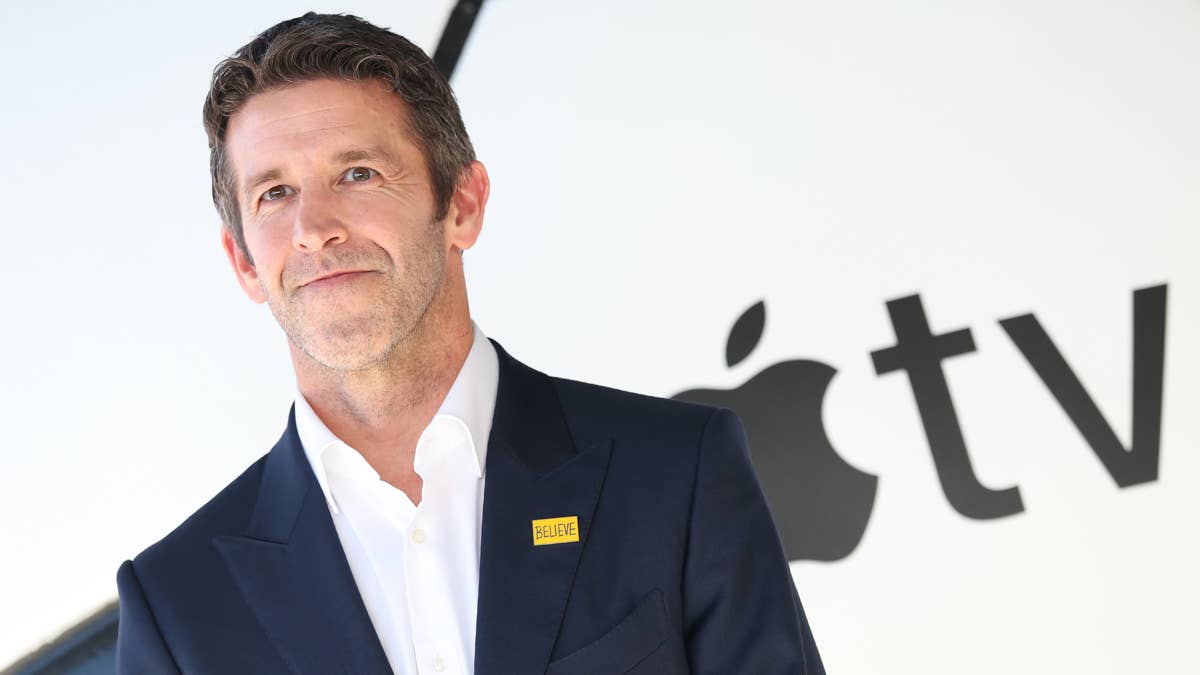
Image via TheStreet
Apple After Ternus: Bank of America Isn’t Changing the Rating, Just the Math
Bank of America didn’t change its rating on Apple as hardware chief John Ternus takes the reins, but the real story is in the estimates underneath. That’s how big banks often move the goalposts: keep the headline rating stable while quietly adjusting the earnings path, multiple assumptions, and the long-term narrative.
A CEO transition at Apple is not a quarterly event; it’s a multi-year reframing. Investors will watch whether the company leans harder into services, wearables, and ecosystem monetization, or whether it finds a credible “next platform” story that isn’t just another camera bump and a new colorway.
Wall Street also cares about what kind of operator Ternus is in the chair. Apple can afford a steady hand, but it can’t afford strategic drift in a world where AI-first devices, on-device inference, and platform shifts are rewriting the rules in real time.
🥃 Cole's Take: Apple doesn’t need a hero; it needs clean execution and a believable product roadmap that keeps the ecosystem sticky while AI changes consumer behavior. If BofA is lifting estimates without making noise, that tells you institutions still want to own the franchise, just with a tighter story. I’d hold Apple for durability, but I wouldn’t pay any price for it unless I see a clear catalyst beyond buybacks and services growth.
Google’s AI Chip Chest-Thump: Big Words, Bigger Stakes
Google Cloud leadership is talking up its AI chip ambitions, effectively telling the market that its in-house silicon can compete in a world still dominated by Nvidia and increasingly crowded by hyperscaler custom chips. The claim matters because chips are no longer just components; they’re the toll booths for AI economics.
For Google, this is about controlling cost, availability, and performance while keeping customers inside its cloud. If the company can deliver compelling performance per dollar, it reduces dependency on third parties and turns infrastructure into a differentiator instead of a commodity.
But bold claims don’t win workloads; developer trust does. Enterprises want stable tooling, predictable pricing, and the ability to move models and pipelines without being trapped. The real test won’t be a benchmark slide, it’ll be customer adoption, uptime, and whether Google can make the “easy button” feel easy for the average company that doesn’t have a PhD staff.
🥃 Cole's Take: Every cloud giant wants to be its own Nvidia, and most of them underestimate how hard it is to earn mindshare at the developer level. I’ll believe Google’s chip story when I see sustained workload migration and margin improvement, not just confident quotes. As an investor, I like vertical integration, but I price it as optionality until the revenue proves it.

Image via Outdoor Life
Whitetail Power Shift: The South Is Making a Serious Run at the Crown
New data suggests the South could be challenging the Midwest as the premier destination for mature whitetails. That’s a big statement in deer camp culture, where Midwest dirt has been treated like the promised land for decades.
A regional shift doesn’t happen by accident. Herd health, genetics, habitat management, pressure, seasons, and private-land practices all play a role. In parts of the South, you’re seeing more disciplined age structure, better nutrition, and pockets of lower pressure than the old “everyone goes to Iowa” playbook.
If you’re the kind of guy who plans hunts like investment theses, this matters. Opportunity tends to move where the crowd isn’t looking, and the first signal is usually better outcomes with less chaos around them.
🥃 Cole's Take: I like the South as an “inefficient market” for whitetails: fewer assumptions baked in, more room for smart management and access plays. The Midwest will always produce giants, but value hunters win by getting early into the next great zip codes. If you own or lease land, this is a reminder that habitat work and pressure control can beat geography.
Azimut Fly 70: Cleaner Tech, Smarter Outdoor Living
Azimut’s new Fly 70 is leaning into what owners actually use: outdoor space and flybridge livability, paired with emissions-reduction technology. Designers Alberto Mancini and Fabio Fantolino are aiming for a 70-footer that feels less like a floating hallway and more like a layered set of outdoor rooms.
What’s interesting is the direction of travel: not just “more luxury,” but better efficiency and a layout that matches how people boat now. Owners want social zones, shade, airflow, and easy transitions between lounging, dining, and water access.
There’s a broader luxury trend here that mirrors real estate: people are paying for experience per square foot, not just square footage. If a yacht makes the outside feel effortless, it wins, because that’s where the good memories get made.
🥃 Cole's Take: The best luxury purchases don’t just show status; they buy you time and comfort in the moments you actually live. I like that Azimut is blending smarter layout with cleaner tech, because regulations and fuel realities aren’t getting looser. If you’re shopping this class, prioritize usability and operating profile over brochure glamour.

Image via GOLF.com
LIV Golf Chapter 11: The Tab Finally Came Due
LIV Golf filed for Chapter 11 bankruptcy, confirming what had been long-rumored: heavy obligations and a plan to restructure. The league had money, headlines, and talent, but it also had a cost base that assumed the business model would mature faster than the market would accept it.
Bankruptcy in this context isn’t necessarily “lights out,” but it is a reset button. It forces a hard look at contracts, event economics, sponsorship reality, and what happens when the initial wave of disruption meets the boring math of recurring revenue.
For golf fans, the question is what survives: the format, the players, the schedule, and the leverage. For the business world, it’s a reminder that even a well-funded challenger has to answer to unit economics eventually.
🥃 Cole's Take: This is what happens when you try to brute-force legitimacy with cash and ignore the long runway required to build a sports product people truly stick with. Chapter 11 doesn’t mean the idea was worthless, but it does mean the pricing and spending were detached from reality. If you’re investing anywhere near “disruption,” remember: narratives raise money, but cash flow keeps score.
📎 GOLF.com
Cole Hargrove The Balanced Brief Live Well. Invest Smart. No Apologies.
— Cole Hargrove