Nuclear energy stocks surged 40%+ this year as the next buildout cycle accelerates toward 2026. One uranium producer just generated nearly $200 million in quarterly free cash flow, while other nuclear companies locked in massive government contracts—all driven by real earnings and exploding demand as U.S. capacity is projected to triple.
Our analysts identified 7 nuclear stocks positioned to capitalize on this trend right now. Some offer explosive upside tied to uranium prices, others provide steady growth from infrastructure contracts. Get the complete list with names and tickers free today—but this report moves behind the paywall soon.
Get the Free ReportBy clicking the link above, you will get this free report and a free subscription to MarketBeat's daily email newsletter. You are also agreeing to the terms of our privacy policy. Unsubscribe at any time.

Live Well. Invest Smart. No Apologies.

Image via Forbes
SpaceX rips higher again — and private markets are starting to look like public markets
SpaceX shares jumped again in premarket trading, pushing the implied valuation toward a jaw-dropping $2.75 trillion. If that move holds, the company would sit among the world’s most valuable businesses, trailing only a handful of names that already dominate index funds and retirement plans. That’s the part that matters: a once “special situation” private holding is now getting priced like a core macro asset.
What’s driving this kind of tape isn’t just rocket launches and slick livestreams. It’s the market putting a premium on scarce growth at scale: launch, Starlink’s global connectivity footprint, and the optionality investors assign to anything that looks like infrastructure for defense, AI data movement, and next-gen communications. Private liquidity is also deeper than it used to be—employees, early investors, and secondaries have created a semi-public price discovery loop.
The big takeaway is how quickly “private” can become “systemic.” When a private company’s valuation starts circling the same airspace as mega-cap tech, it changes portfolio behavior: more allocators chase access, more leverage creeps in around secondaries, and more people convince themselves the exit will always be there. That’s when you want your eyes open.
Source: Forbes
Read the full story at Forbes →
Gold stocks are back on the menu — here’s why the list matters more than the metal
Benzinga ran a fresh look at “best gold stocks right now,” and these roundups are useful for one reason: they force you to separate three very different bets that get lumped together as “gold.” You’ve got senior miners with scale, mid-tiers with operational torque, and royalty/streaming businesses that behave more like high-margin finance than pick-and-shovel operators.
When inflation anxiety rises (or just refuses to die), investors often buy gold as insurance. But gold equities aren’t pure insurance—they’re businesses with costs, execution risk, jurisdiction risk, and management teams that can either create real value or quietly dilute you into boredom. In a strong gold tape, miners can outperform the metal. In a sloppy tape, they can underperform badly even if spot prices behave.
If you’re shopping this space, pay attention to all-in sustaining costs, balance sheet discipline, and whether management is allergic to overpaying for growth. The best time to own gold stocks is when they’re run like adults—because the commodity will do what it does, but corporate behavior decides whether you keep the upside.
Source: Benzinga
Read the full story at Benzinga →
Treasury supply stays heavy — and the 10-year yield keeps getting a front-row seat
The U.S. government sold $646 billion of Treasury securities in a single week, while Treasury notes and bonds outstanding rose on net by $59 billion. That’s the kind of number that doesn’t just live on a spreadsheet—it shows up in yields, mortgage rates, and the discount rate applied to everything from software multiples to commercial real estate cap rates.
Wolf Street frames it in blunt terms: heavy issuance meets an inflation backdrop that may be setting up for a “second wave,” and the 10-year yield is where those forces wrestle. Even if the Fed holds its policy rate steady, the long end can move on supply/demand, term premium, and investor confidence that inflation is actually contained.
This is why “the market” can feel schizophrenic: equities can rally on growth narratives while bonds demand higher compensation to finance deficits and inflation uncertainty. When Treasury supply is this persistent, you don’t need a crisis for yields to stay stubborn—you just need buyers to require a better deal.
Source: Wolf Street
Read the full story at Wolf Street →

Image via Car and Driver
Mercedes-AMG turns the volume back up: new 603-hp V-8 GLS63 and GLE63 S
Mercedes-AMG pulled the cover off the 2027 GLS63 and GLE63 S, both packing a new 603-horsepower V-8. The promise is classic AMG math: sub-four-second runs to 60 mph and a claimed top speed up to 174 mph—numbers that still sound ridiculous when you remember these are SUVs with room for your golf clubs, a week’s worth of luggage, and an ego.
Car and Driver’s early details point to AMG keeping the formula alive: big displacement, big power, and the kind of straight-line shove that makes highway on-ramps feel like a private runway. In a market where electrification is the headline, AMG is clearly betting there’s still a well-funded audience that wants a combustion flagship with the right badge and the right noise.
The broader context: luxury performance is splitting into two tracks. One is silent, instant-torque EV speed. The other is emotional, mechanical excess—engine character, sound, and the feeling that you’re operating something with a heartbeat. AMG is telling you, plainly, they’re not done selling that second experience.
Source: Car and Driver
Read the full story at Car and Driver →
Yamaha’s 2027 ATV lineup drops early — and the off-road market keeps getting more deliberate
Yamaha revealed its 2027 ATV lineup, giving riders an early look at what’s coming next model year. Off-Road.com notes the announcement as a practical preview for buyers who plan purchases around seasons, property needs, and trail time rather than impulse—because these machines aren’t toys once you’re using them for land work, hunting access, or long weekends off-grid.
The ATV category has matured in a way that mirrors trucks and SUVs: fewer buyers want the cheapest machine; more want the right machine. That means comfort, durability, dealer support, and real-world reliability matter as much as spec-sheet bragging rights. When you’re 30 miles from pavement, “good enough” is a myth.
If you’ve been thinking about adding an ATV to the mix—whether it’s for a farm, a cabin property, or simply a cleaner way to explore backcountry trails—these early lineup releases are your reminder to plan. The best deals and the best availability tend to go to people who shop before the first weekend of perfect weather.
Source: Off-Road.com
Read the full story at Off-Road.com →
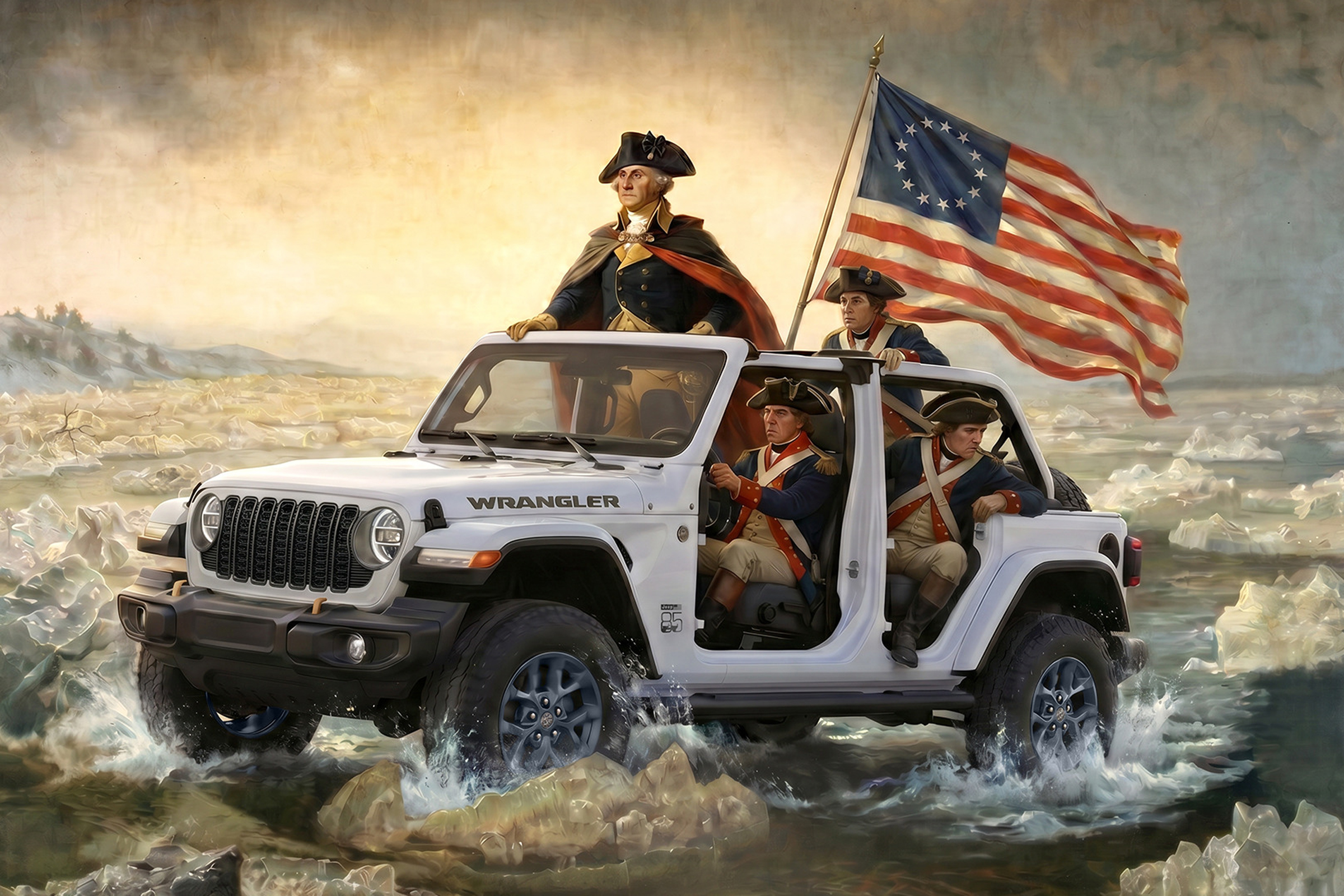
Image via OffroadXtreme
Jeep’s World Cup promo is peak America: free Wranglers for George Washington (yes, legally)
Jeep is running a promotion that sounds like a late-night bar bet: if Team USA wins the World Cup, Americans who are legally named George Washington can win a new Wrangler. OffroadXtreme confirms it’s real, and it’s exactly the kind of brand stunt that lands because it’s weird, specific, and impossible to ignore.
From a marketing standpoint, it’s a reminder that legacy auto brands are fighting for attention in a crowded, algorithm-driven world. The Wrangler is already an icon, but icons still need fresh stories—especially when consumers are juggling higher financing costs, insurance sticker shock, and a used market that’s no longer a guaranteed bargain.
The cultural subtext is just as important: the World Cup is now a mainstream U.S. event, not a niche sports-bar curiosity. Brands don’t build campaigns like this unless they believe the audience is big, engaged, and ready to spend. Whether Team USA can deliver the condition is another matter—but Jeep’s already getting the mileage.
Source: OffroadXtreme
Read the full story at OffroadXtreme →
That’s the brief. Keep your risk tight, your time outside protected, and don’t finance a toy like it’s a necessity — the market doesn’t care what your monthly payment is.
— Cole Hargrove