History shows a clear pattern: the investors who recognized the exact inflection point in the dot-com boom pocketed 400–800% gains in 18 months. Those who spotted the same moment in cloud computing saw 300–600% returns. Based on 50 years of market data, that same moment is happening right now — and the acceleration phase has already begun.
This free 7-page report reveals where we are in the current megatrend cycle, why the next 18 months are critical, and how to position yourself before the window closes. Don't be the investor who enters too late.
Get the Free ReportBy clicking 'Get the Free Report' you are automatically subscribing to Darwin Investor Network and will receive a free subscription to the Chaikin PowerFeed newsletter. Unsubscribing is easy. Privacy Policy

Live Well. Invest Smart. No Apologies.
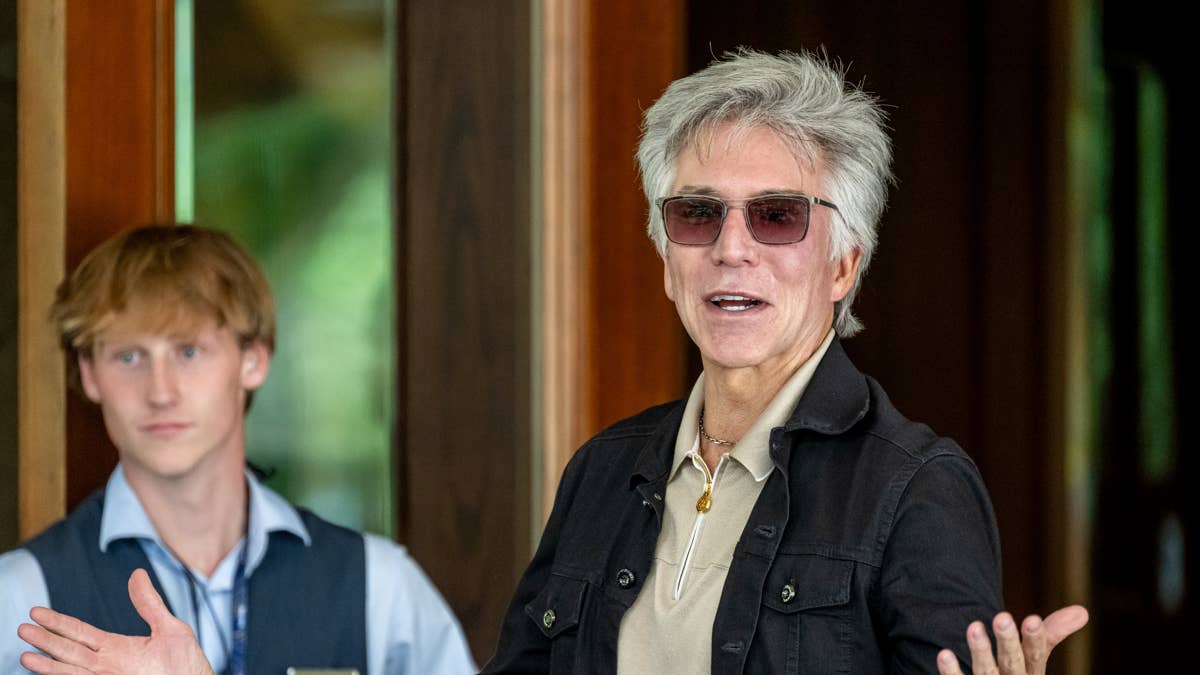
Image via TheStreet
ServiceNow’s AI Edge Isn’t Chat. It’s the Paper Trail.
Bank of America is pointing at something most investors gloss over when they lump every enterprise AI story into one bucket: ServiceNow has years of workflow history and operational context sitting inside the systems companies actually use to run IT, HR, security, and service management.
In plain English, that means its AI agents aren’t starting from scratch. They can pull from structured tickets, approvals, incident timelines, asset inventories, and infrastructure data to handle messy, multi-step enterprise cases where generic copilots tend to stall out.
The market loves shiny demos, but enterprise buyers pay for outcomes: fewer escalations, faster resolution, cleaner compliance, and less headcount spent chasing status updates. If ServiceNow’s agents can reliably close the loop across teams and tools, that becomes a budget line item that survives even when CFOs get tight.
🥃 Cole's Take: The winners in enterprise AI won’t be the loudest models, they’ll be the platforms with the deepest operating memory. ServiceNow’s advantage is that it already sits in the middle of the work, so AI can act, not just suggest. If you own it, I’d treat dips like inventory restocking, not a reason to get cute.
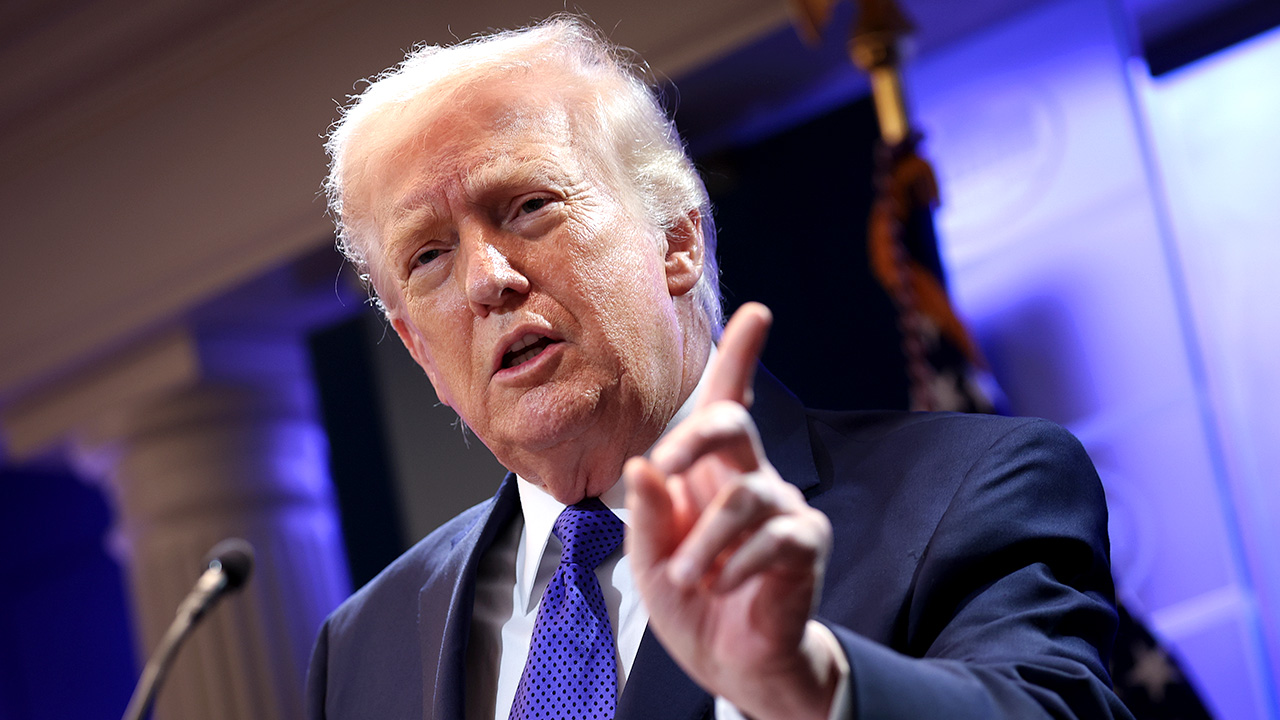
Image via Fox Business
New Tariffs Drop on 60 Partners: Inflation’s Sneaky Comeback Risk
The Trump administration rolled out new tariffs hitting 60 trading partners as temporary duties expired, with new rates reported at 10% and 12.5%. The list includes major counterparts like Canada, India, the EU, and Taiwan.
Tariffs are a tax with better branding. Sometimes they’re used as leverage, sometimes they’re used as a political message, but the transmission mechanism to the real economy is familiar: higher input costs, supply chain reshuffling, and a fresh excuse for price increases that consumers rarely claw back.
Markets will try to handicap whether this is a short negotiating phase or a longer regime shift. Either way, it complicates the “soft landing” narrative and can quietly pressure margins in manufacturers, retailers, and any business with thin pricing power.
🥃 Cole's Take: Don’t overtrade the headline, but don’t ignore the second-order effects. Tariffs tend to show up in earnings calls as “temporary headwinds” and in your life as permanently higher prices. If this sticks, I want quality businesses with pricing power and I want some dry powder because volatility usually follows policy whiplash.
India Dealmaking Is Hot Again, and It’s Not Just Hype
Bloomberg reports that the value of deals involving Indian companies is up almost 40% this year, setting up what could be a very strong year for M&A. That’s a meaningful jump, and it says something about confidence in growth, financing availability, and boardroom willingness to act.
India has been building the kind of fundamentals that attract serious capital: a large domestic market, rising digitization, improving infrastructure, and an expanding base of globally competitive firms. Add in the push for supply-chain diversification and you get a steady pipeline of strategic transactions.
For investors, more M&A is often a sign that management teams see enough visibility to pay up for assets, not just hoard cash. It also tends to create winners and losers inside sectors as consolidation reshapes pricing and competition.
🥃 Cole's Take: When deal volume rises, it’s usually because the smart money sees tomorrow’s market share being bought today. I’m watching India exposure through select global operators and disciplined funds, not “story stocks” with perfect narratives and messy numbers. If the trend holds, expect more IPO chatter to follow once boards regain their swagger.

Image via Off Road Xtreme
A 1,500-HP Jeep That Eats Tires for Breakfast
Off Road Xtreme highlighted a Wrangler build by Westen Champlin that’s basically a rolling middle finger to restraint: a supercharged LS V8 swap pushing around 1,500 horsepower. It’s engineered for burnouts, with the kind of power-to-traction imbalance that exists purely for grins.
The supporting cast matters here: a welded differential to keep both rears turning together, and a setup aimed at turning rubber into smoke on command. It’s not subtle, it’s not “overland practical,” and that’s the whole point.
There’s a reason stories like this travel. In a world obsessed with optimization, a build like this reminds you that hobbies are allowed to be ridiculous, loud, and slightly irresponsible as long as you keep it safe and off public roads when you’re doing the dumb stuff.
🥃 Cole's Take: This is the mechanical version of a speculative trade: high power, high consequence, maximum entertainment. I love it as a reminder that not everything has to justify itself on a spreadsheet. Just like in markets, know what game you’re playing, set boundaries, and don’t pretend burnout money is retirement money.
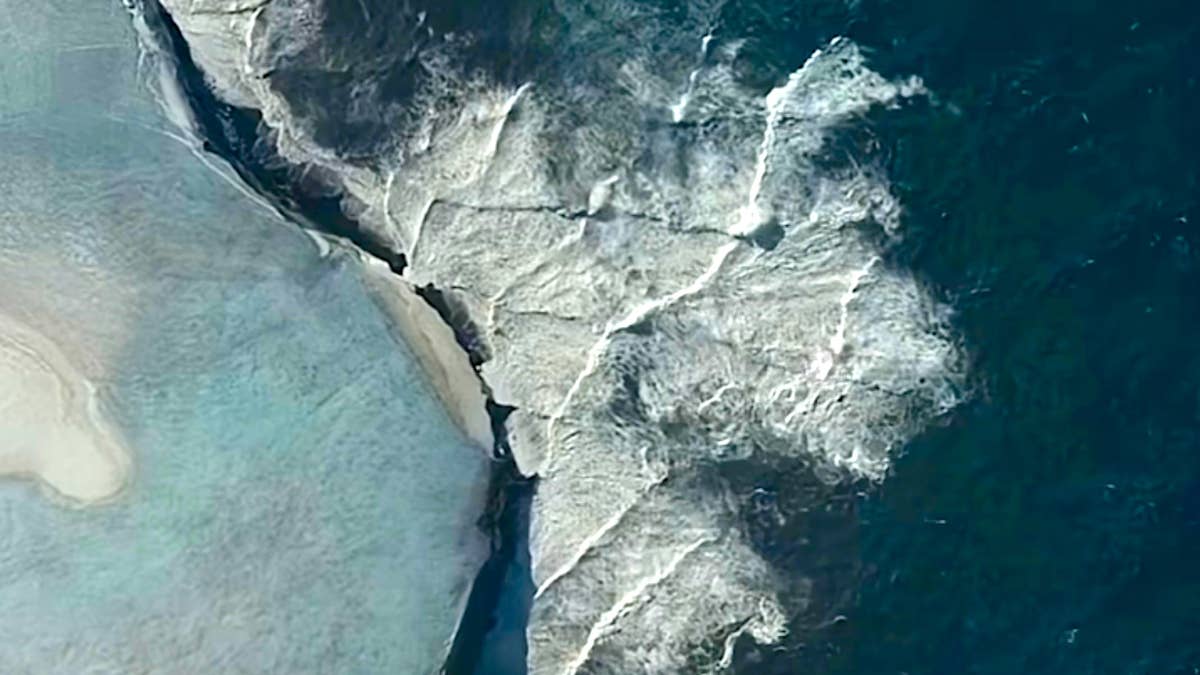
Image via Surfer
Bouvet Island and the Hunt for the World’s Biggest Wave
Surfer is asking a question that hits every outdoorsman right in the curiosity: could the world’s biggest wave be hiding at Bouvet Island, one of the most remote spots on Earth? Satellite imagery suggests the island may generate giant-wave setups that could rival Nazaré, maybe even exceed what we currently label as “big.”
The appeal is obvious. Remote bathymetry, harsh weather, and the kind of swell exposure that can turn ocean energy into something historic. The problem is also obvious: access, safety, and the brutal logistics of operating where rescue is a concept, not a guarantee.
Even if the wave exists, “existence” and “rideable” are two different things. The next frontier in adventure isn’t just finding the spot, it’s building the operational capability to approach it without turning exploration into a tragedy.
🥃 Cole's Take: I’m drawn to this the way I’m drawn to markets before the crowd shows up: the edge is usually where it’s inconvenient. But remoteness is a tax you pay in risk, not money, and it compounds fast. If that wave is real, the first winners won’t be the bravest surfers, they’ll be the teams with the best planning and the humility to wait.
📎 Surfer

Image via GOLF.com
DeChambeau, the Penalty, and the Part Nobody Practices
Golf.com reports Bryson DeChambeau spoke to media for the first time since the Open Championship controversy and his two-stroke penalty, framing it as adversity. Whether you like Bryson or not, he’s a case study in what happens when high-profile performance meets high-friction rules.
At elite levels, the margin isn’t your swing speed, it’s your ability to manage the moments when the game gets unfair, or at least feels that way. Penalties, bad bounces, weather shifts, and officiating decisions are part of the job description, and they can hijack a tournament faster than a missed putt.
The public part matters too. The story isn’t only the ruling; it’s how a player carries himself afterward, how he protects his process, and how he avoids letting one ruling rewrite his whole identity as a competitor.
🥃 Cole's Take: Adversity in golf looks small until you’ve played for something that matters. The best players don’t win every argument, they win the next shot. If you’re building wealth or trying to shave strokes, it’s the same muscle: accept the ruling, learn the lesson, and get back to execution.
📎 GOLF.com
That’s the brief. Keep your powder dry, your risk intentional, and your weekends sacred. I’ll be watching earnings, tariffs, and the IPO tape with a glass of something peaty when the sun drops over Nashville.
— Cole Hargrove