Policy shifts are already moving markets in 2026 — trade enforcement, regulatory changes, and tax positioning are redirecting capital flows right now. The stocks benefiting from these trends are showing momentum early, and institutional money is already repositioning.
Our latest research brief breaks down the 5 Best Stocks to Buy Under the Current Administration — including the sectors leading this rotation and a clear framework for acting before the crowd catches on. Markets don't wait for certainty. Don't get left behind.
Get the Free ReportBy clicking the link above, you're choosing to opt in to receive insightful updates from The Investment News Daily + 2 free bonus subscriptions. Your privacy is important to us. You can unsubscribe anytime. See our privacy policy for details.

Live Well. Invest Smart. No Apologies.

Image via Robb Report
Bellini Borrowed a Racer’s DNA—and Turned It Into a Proper Weekend Weapon
Bellini’s newest yacht is reportedly inspired by a one-off 38-footer commissioned by Italian racing driver Francesco Castellacci—an owner build with the kind of “don’t copy me” details that usually stay locked inside a shipyard’s black book. The production model pulls those cues into something repeatable: performance posture, sharp lines, and that purposeful “I’m leaving the marina before your espresso cools” stance.
What’s interesting isn’t just the style—it’s the signal. Ultra-premium builders keep leaning into motorsport aesthetics because the buyer wants speed and identity, not floating real estate. In a world where everything gets commoditized, bespoke becomes the moat—and the story becomes part of the asset.
✍ My Take: Luxury demand hasn’t died—it’s just gotten pickier. The winners aren’t selling “more boat,” they’re selling provenance and velocity. If you’re investing around the luxury ecosystem, follow the brands that can productize bespoke without turning it into mall jewelry.
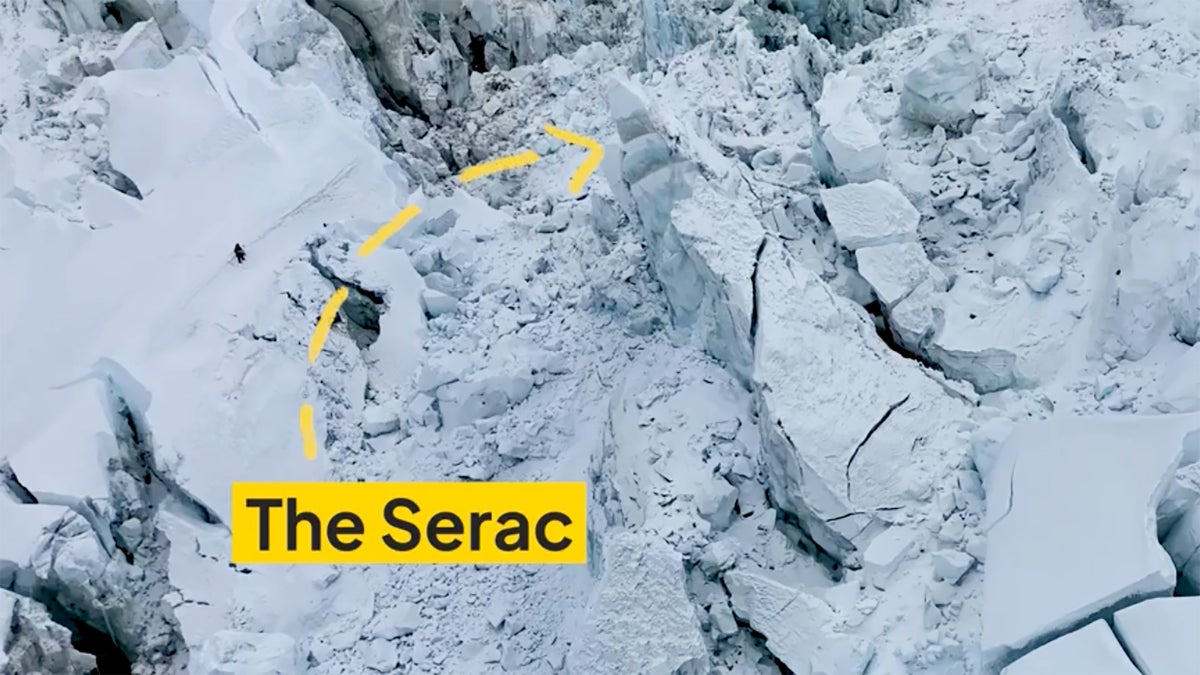
Image via Outside
Everest’s Khumbu Serac: The Drone Footage That Makes the Risk Unmistakable
A drone video captured the towering serac that threatens the route through the Khumbu Icefall—an unstable wall of ice that can collapse without warning. Officials have reportedly delayed opening Everest to climbers because the serac’s position and instability make the standard passage too dangerous.
This isn’t just mountain drama—it’s a reminder that “adventure travel” is increasingly a logistics and climate problem, not just a fitness problem. When one objective hazard can shut down an entire season, the ripple hits guides, insurers, outfitters, helicopter operators, and everyone who built a business model on predictable windows.
✍ My Take: Everest has always been risky; what’s changing is the reliability of the route and the economics around it. If you’re spending big on expedition travel, you want operators with real contingency planning—alternate objectives, flexible timing, and the financial muscle to eat cancellations. And if you’re investing in the outdoor economy, bet on businesses built for volatility, not perfect seasons.
📎 Outside
Big Tech’s AI Alliances Are Shifting—And That’s Where the Leverage Is
Investor’s Business Daily reports Google is set to increase its investment in Anthropic, while OpenAI and Microsoft are shaking up the terms of their partnership. Read that as: the AI arms race is no longer just about models—it’s about control of distribution, compute, and who gets paid first when enterprise money hits the table.
These partnerships are starting to look less like friendly collaborations and more like treaty negotiations between nations with nukes. The underlying driver is simple: AI is expensive, and the only durable advantage is owning the pipeline—chips, cloud, data, and the customer relationship.
✍ My Take: This is what maturing markets look like—power consolidates, contracts get rewritten, and the middlemen get squeezed. If you own the “picks and shovels” (compute, power, infrastructure), you’re sleeping better than the folks betting on a single model staying on top. I’d rather own the toll roads than argue about which car brand wins.
I’m Cole Hargrove—protect the downside, stay liquid enough to move, and save a little time for the back nine.
— Cole Hargrove